
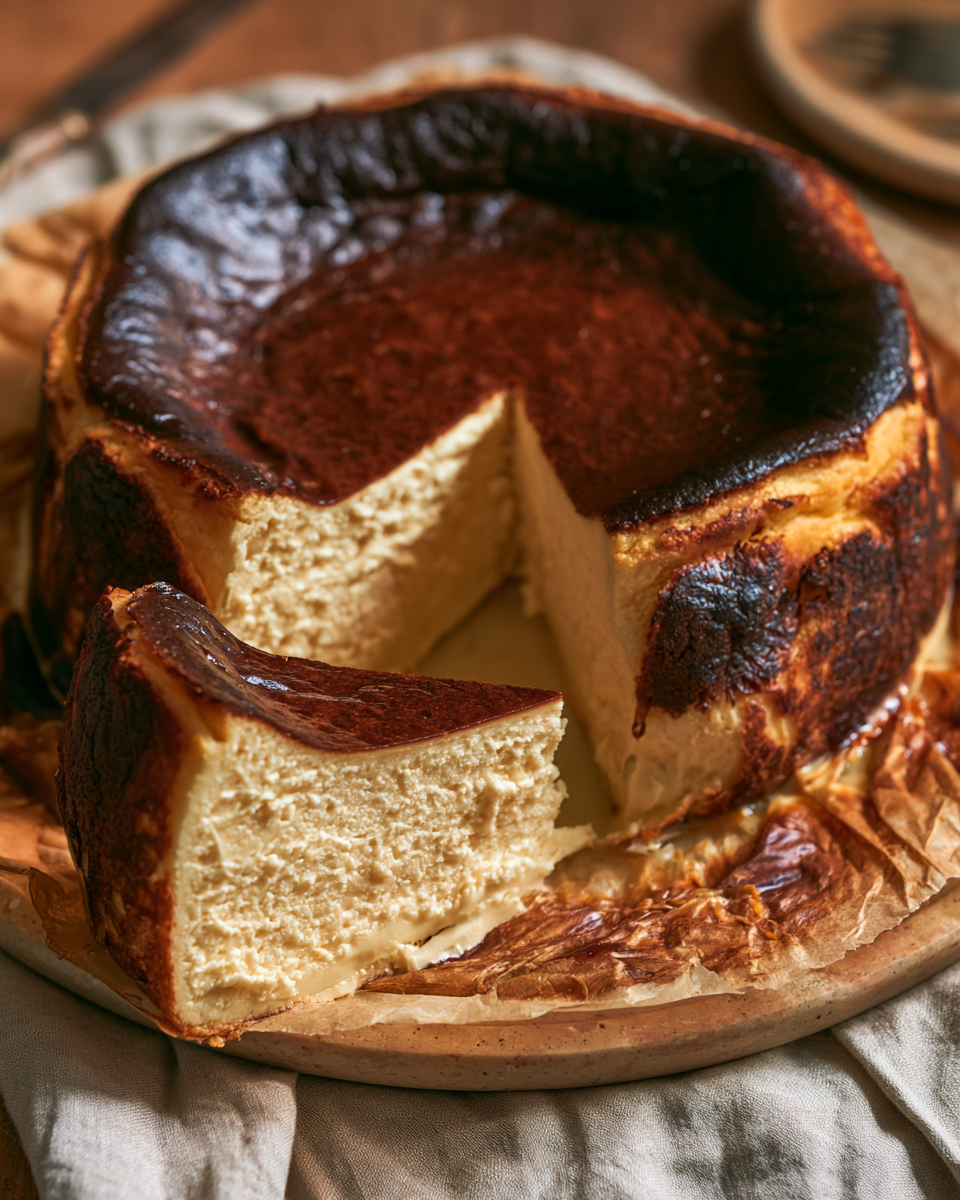
Basque Burnt Cheesecake is a crustless, high-heat baked dessert defined by its deeply caramelized exterior and exceptionally creamy, molten interior. Originating from San Sebastian, Spain, this dessert abandons the traditional water bath and crumb crust to focus entirely on texture and flavor. Achieving the perfect balance of a scorched surface and a silky center requires precise oven management and quality ingredients. This iconic treat delivers a bold, rustic aesthetic while offering a sophisticated flavor profile that appeals to every palate.
| Prep Time | Cook Time | Total Time | Servings | Difficulty | Cuisine |
|---|---|---|---|---|---|
| 15 minutes | 45 minutes | 4 hours | 10 slices | Easy | Spanish |
Why This Recipe Works
This recipe succeeds because it prioritizes temperature control and ingredient ratios to replicate the authentic San Sebastian experience. I developed this approach after testing various oven temperatures to ensure the exterior achieves a dark, bitter-sweet char without compromising the integrity of the creamy center.
You will find that the high-temperature bake causes the sugars to caramelize rapidly, creating an intense depth of flavor that contrasts perfectly with the mild, tangy cream cheese base. By avoiding a crust, the focus remains entirely on the velvet-like consistency, making it a reliable dessert for beginners and professionals alike.
Ingredients
| Ingredient | Quantity | Notes |
|---|---|---|
| Cream Cheese | 900g | Room temperature is essential |
| Granulated Sugar | 300g | Fine caster sugar works best |
| Large Eggs | 6 units | Room temperature |
| Heavy Cream | 480ml | High fat content required |
| All-Purpose Flour | 40g | Sifted to prevent lumps |
| Vanilla Extract | 1 tsp | Pure extract preferred |
| Salt | 0.5 tsp | Fine sea salt |
Step-by-Step Instructions
Preparation and Mixing
Preheat your oven to 220°C (425°F) with a rack in the middle position.
Line a 9-inch springform pan with two overlapping sheets of parchment paper, ensuring it extends at least two inches above the rim.
Beat the room-temperature cream cheese and sugar in a large bowl until the mixture is completely smooth.
Add the eggs one at a time, whisking thoroughly after each addition to maintain the emulsion.
Pour in the heavy cream and vanilla extract, whisking gently to incorporate the liquids.
Sift the flour and salt over the mixture, folding gently until no white streaks remain.
Baking and Cooling
Pour the smooth batter into the prepared springform pan, tapping it against the counter to release trapped air bubbles.
Bake for 40 to 45 minutes until the top is deeply browned and the center retains a distinct wobble.
Remove the pan from the oven and place it on a wire rack to cool completely for at least three hours.
Release the sides of the pan once the cake has reached room temperature for optimal presentation.
Chef Tips for Perfect Results
Ensure all ingredients are at room temperature to avoid lumps and ensure a smooth batter consistency.
Use two layers of parchment paper to prevent leaks and create the signature rustic, crinkled edges.
Do not skip the sifting step for the flour, as this prevents unwanted clumps in the finished cheesecake.
Monitor the oven closely during the final five minutes to ensure the top chars deeply without burning to black ash.
Resist the temptation to cut into the cake while it is warm, as the center needs time to set properly.
Common Mistakes to Avoid
Mixing at high speed introduces air, which causes the cake to puff excessively and crack during baking. Use a steady, medium-low speed to combine ingredients.
Under-baking the center results in a puddle rather than a creamy texture. Aim for a distinct, gentle jiggle across the entire cake.
Using cold eggs causes the cream cheese to seize, leading to a grainy texture. Always bring your eggs to room temperature before mixing.
Over-baking turns the creamy center dry and curdled. Pull the cake when the wobble is visible to ensure the texture stays silky.
Variations and Substitutions
| Ingredient | Substitution | Impact on Flavor |
|---|---|---|
| Heavy Cream | Full-fat sour cream | Adds a slightly more tangy profile |
| Vanilla | Lemon zest | Provides a brighter, citrus-forward finish |
| All-Purpose Flour | Cornstarch | Yields a slightly lighter, more delicate structure |
Serving Suggestions and Pairings
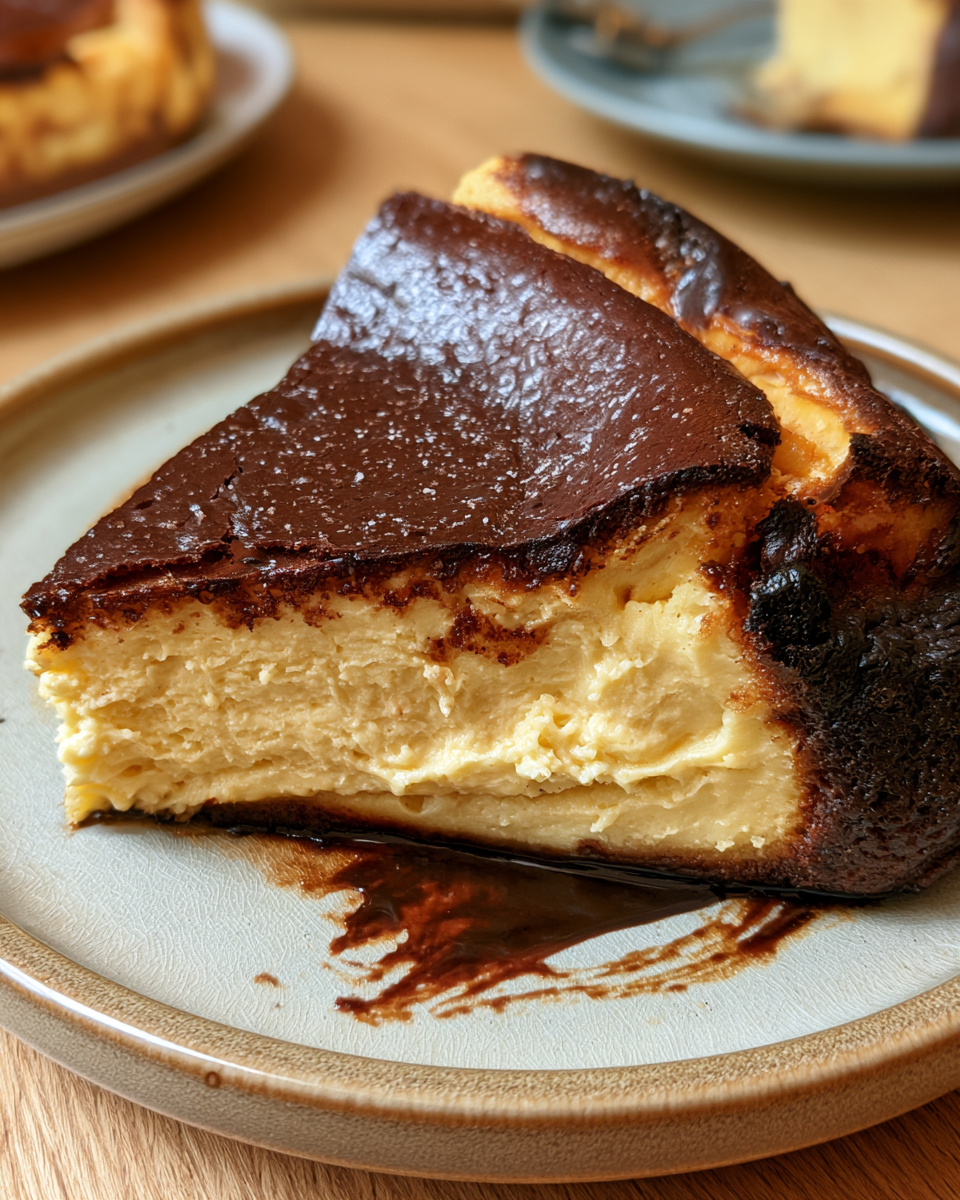
Serve this Basque Burnt Cheesecake at room temperature to highlight its creamy texture. It pairs exceptionally well with a side of fresh seasonal berries or a light dollop of unsweetened whipped cream. For a sophisticated finish, consider a dusting of cocoa powder or a drizzle of sea salt caramel. This dessert shines at dinner parties, holiday gatherings, or as a decadent weekend treat paired with freshly brewed black coffee or high-quality loose-leaf tea.
Storage and Reheating
| Method | Duration | Instructions |
|---|---|---|
| Refrigerator | 3 days | Cover tightly with plastic wrap |
| Freezer | 1 month | Wrap in parchment and foil; thaw in fridge |
Nutritional Information
Approximate values per serving.
| Nutrient | Amount |
|---|---|
| Calories | 480 kcal |
| Protein | 8g |
| Fat | 35g |
| Carbohydrates | 32g |
Frequently Asked Questions
Can I make this cheesecake ahead of time?
Yes, you can prepare the cheesecake up to two days in advance for the best texture. Storing it in the refrigerator allows the flavors to meld and the center to set into a perfect, velvety consistency.
How do I know when the cake is finished baking?
The cake is finished when the top has a deep dark brown color and the center remains jiggly like gelatin. Do not wait for the center to become firm, as this will lead to an overcooked, dry texture.
Why did my cheesecake crack on top?
Cracking typically occurs if the batter is aerated too much during mixing or if the oven temperature is too inconsistent. Avoid whipping air into the mixture and ensure your oven is fully preheated before placing the pan inside.
Can I substitute cream cheese with a lower-fat option?
Full-fat cream cheese is required to achieve the necessary structure and richness of a Basque Burnt Cheesecake. Using low-fat alternatives results in a watery center and a lack of the signature silky mouthfeel.
What is the best way to slice this cake?
The best way to slice this dessert is using a warm, clean knife to achieve a clean edge through the creamy center. Run the knife under hot water and wipe it dry between each slice for the most professional result.
Mastering the Basque Burnt Cheesecake is a rewarding endeavor that proves simple techniques can produce world-class results. By respecting the baking time and focusing on the quality of your ingredients, you ensure a decadent experience every time. Embrace the charred top and the luxurious center to enjoy a classic dessert that never goes out of style. Start your baking journey today and share this rustic, creamy masterpiece with those who appreciate true quality in every single bite.
Basque Burnt Cheesecake
- Total Time: 240
- Yield: 10 slices 1x
- Diet: Vegetarian
Description
Experience the authentic taste of San Sebastian with this iconic Basque Burnt Cheesecake. This crustless dessert features a deeply caramelized, rustic exterior that gives way to an exceptionally creamy, velvety interior. By utilizing high-heat baking, the sugars reach a perfect state of caramelization, creating a sophisticated balance of bittersweet notes and tangy creaminess. It is the ultimate impressive yet simple dessert for any occasion, perfect for those who prioritize decadent texture and pure, high-quality ingredients without the need for a traditional biscuit crust.
Ingredients
900g cream cheese, room temperature
300g granulated sugar
6 large eggs, room temperature
480ml heavy cream
40g all-purpose flour, sifted
1 tsp pure vanilla extract
0.5 tsp fine sea salt
Instructions
Preheat your oven to 220°C (425°F) with a rack in the middle position.
Line a 9-inch springform pan with two overlapping sheets of parchment paper, ensuring it extends at least two inches above the rim.
Beat the room-temperature cream cheese and sugar in a large bowl until the mixture is completely smooth.
Add the eggs one at a time, whisking thoroughly after each addition.
Pour in the heavy cream and vanilla extract, whisking gently until incorporated.
Sift the flour and salt over the mixture and fold gently until no white streaks remain.
Pour the batter into the prepared pan, tapping it against the counter to release air bubbles.
Bake for 45 minutes until the top is deeply browned and the center remains wobbly.
Cool completely at room temperature, then chill for at least 3 hours before serving.
Notes
Ensure all ingredients are at room temperature to avoid lumps in the batter.
The parchment paper must extend well above the pan to prevent spills and handle the lift.
The cake is best served at room temperature after chilling to restore its creamy texture.
- Prep Time: 15
- Cook Time: 45
- Category: Baking
- Method: Baking
- Cuisine: Spanish
Nutrition
- Serving Size: 1 slice
- Calories: 480
- Sugar: 32g
- Sodium: 280mg
- Fat: 38g
- Saturated Fat: 22g
- Carbohydrates: 28g
- Fiber: 0.2g
- Protein: 9g
- Cholesterol: 185mg
