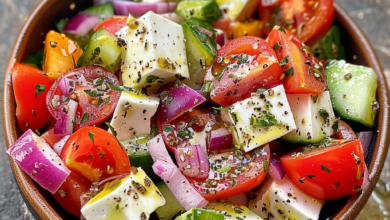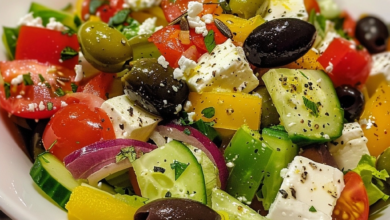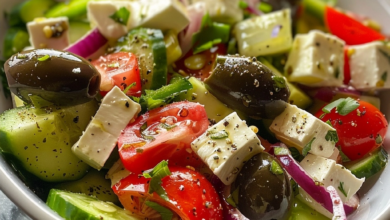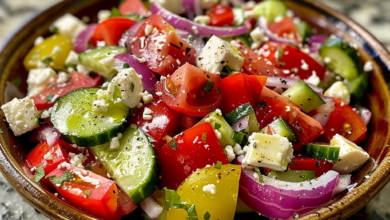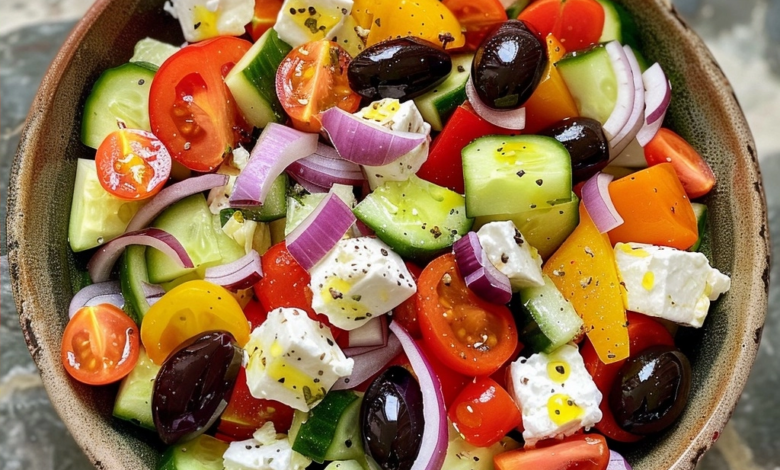
An easy Greek salad recipe provides a vibrant, nutrient-dense Mediterranean dish constructed from crisp cucumbers, ripe tomatoes, kalamata olives, and authentic feta cheese. This classic preparation removes heavy lettuce fillers to focus entirely on the high-quality produce and tangy vinaigrette that define traditional Aegean cuisine. Home cooks achieve consistent results by prioritizing fresh, seasonal ingredients combined with accurate preparation techniques that ensure every bite tastes authentic.
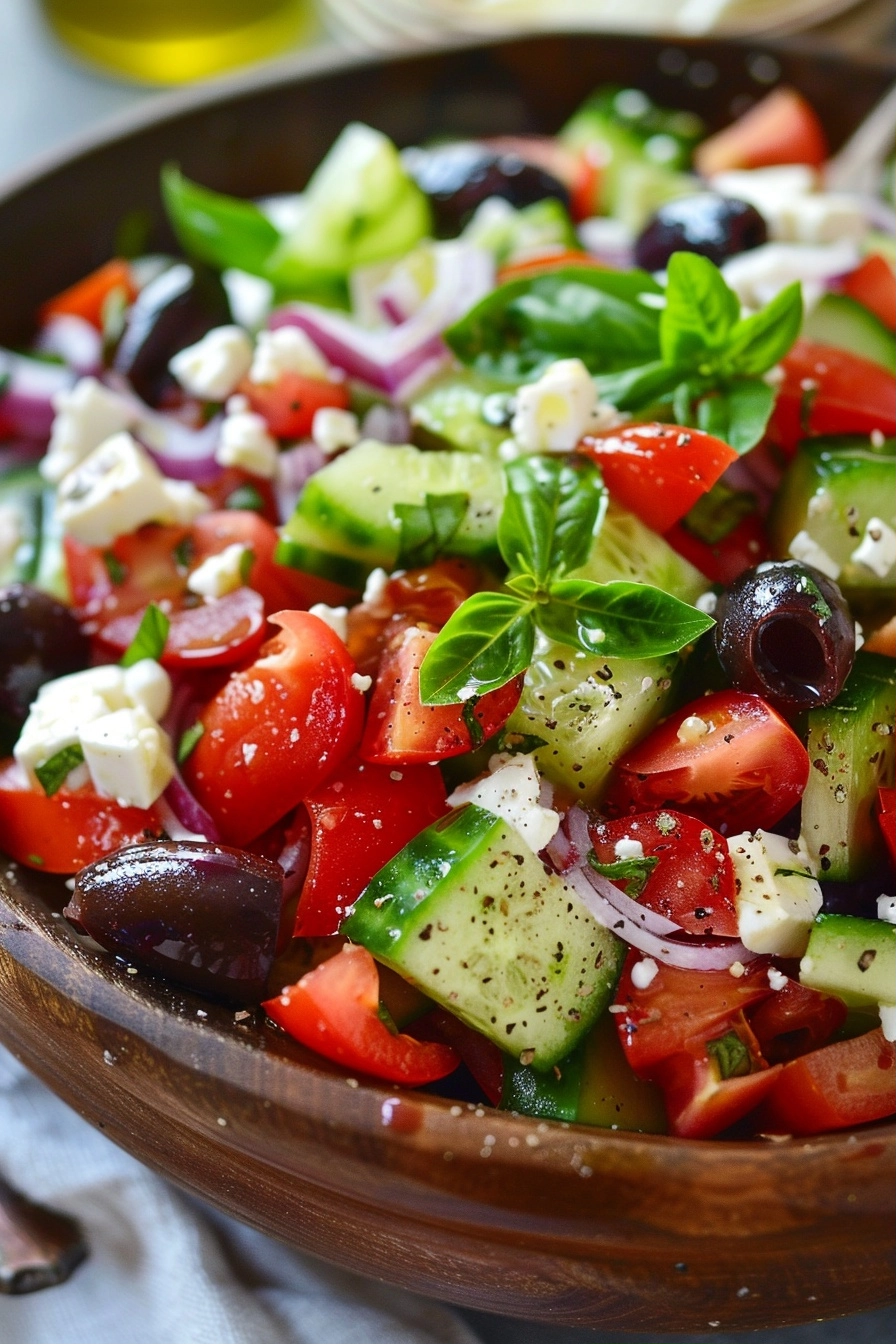
Recipe Overview
| Property | Details |
|---|---|
| Prep Time | 15 minutes |
| Cook Time | 0 minutes |
| Total Time | 15 minutes |
| Servings | 4 servings |
| Difficulty | Beginner |
| Cuisine | Greek |
Why This Recipe Works
This recipe works because it relies on the integrity of simple, raw ingredients rather than complex cooking methods. I developed this version after years of traveling through the Mediterranean, where I learned that the secret to a great salad lies in uniform vegetable sizes and high-quality extra virgin olive oil. By cutting the vegetables into bite-sized chunks, the dressing coats the surface area perfectly, ensuring that every forkful delivers a balance of acidity, saltiness, and freshness.
You will appreciate the lack of tedious cooking steps, making this an ideal choice for busy weeknights or large backyard gatherings. Many store-bought versions use watery fillers, but this approach keeps the bowl crisp and flavorful for hours when stored properly. It acts as a reliable side dish that pairs well with grilled proteins or toasted pita bread, proving that simple components create the most memorable culinary experiences.
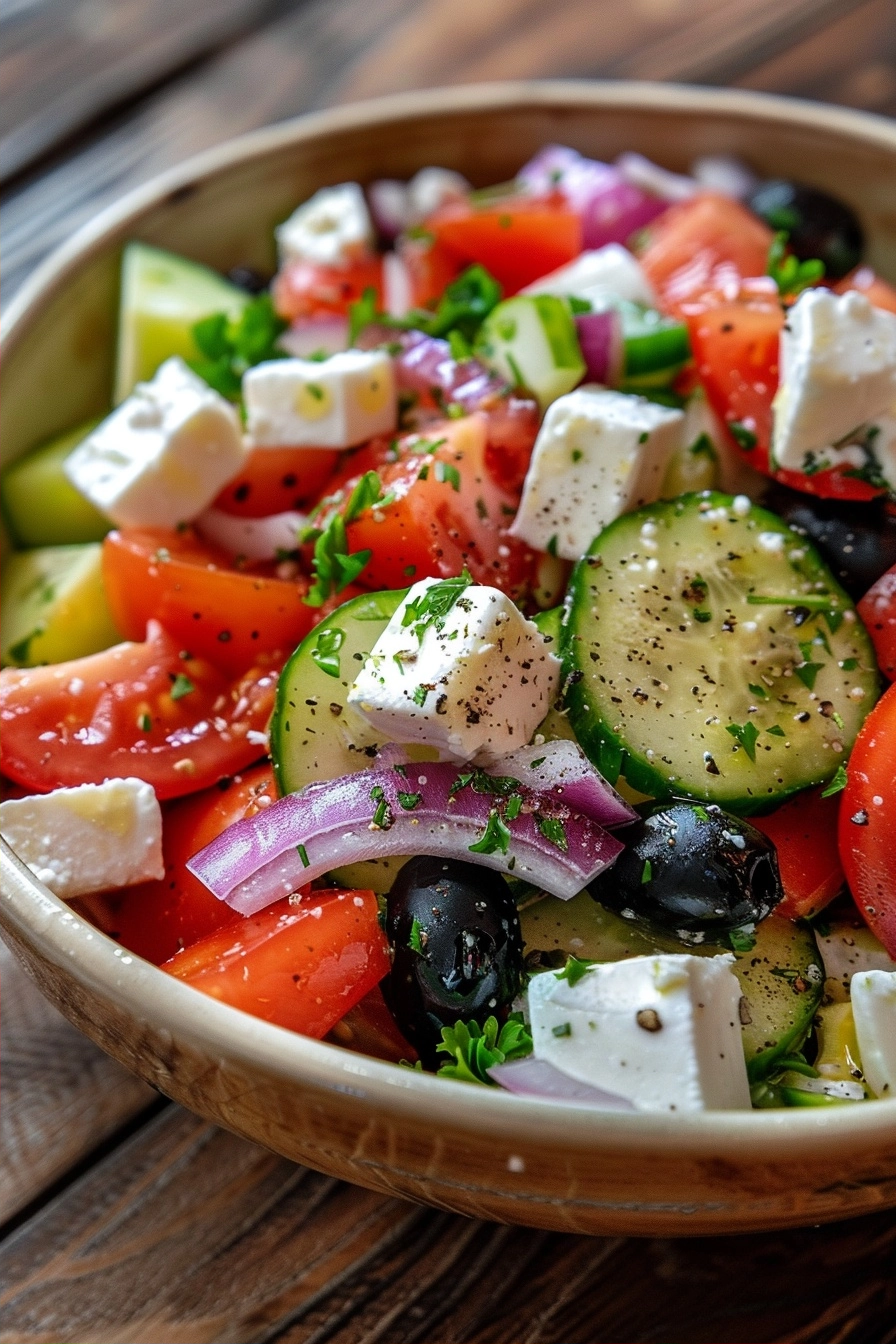
Ingredients
| Ingredient | Quantity | Notes |
|---|---|---|
| English Cucumber | 1 large | Chop into medium chunks |
| Roma Tomatoes | 4 medium | Use vine-ripened for flavor |
| Kalamata Olives | 1/2 cup | Pitted for easy serving |
| Feta Cheese | 1 block | Use authentic block feta |
| Red Onion | 1/4 cup | Thinly sliced for heat |
| Olive Oil | 3 tablespoons | Extra virgin variety |
| Red Wine Vinegar | 1 tablespoon | High quality acidity |
| Dried Oregano | 1 teaspoon | Greek variety preferred |
Step-by-Step Instructions
Preparing the Produce
- Wash the cucumbers and tomatoes thoroughly under cool running water before patting them completely dry to ensure the dressing adheres properly.
- Chop the English cucumber into thick half-moon slices to provide a satisfying, crisp crunch in every serving.
- Dice the firm Roma tomatoes into large chunks to prevent them from breaking down or releasing excess moisture into the final bowl.
- Slice the red onion into very thin slivers using a sharp knife or mandoline to ensure the flavor disperses without overpowering the salad.
Emulsifying and Assembling
- Whisk the extra virgin olive oil with red wine vinegar and dried oregano in a small glass container until fully combined.
- Combine the chopped vegetables and kalamata olives in a large glass mixing bowl.
- Drizzle the vinaigrette evenly over the vegetable mixture and toss gently to ensure every piece receives a light, flavorful coating.
- Place the block of feta cheese on top of the salad and sprinkle with a pinch of extra oregano before serving immediately.
Chef Tips for Perfect Results
- Use authentic feta cheese preserved in brine rather than pre-crumbled varieties for a superior, creamy texture.
- Select room-temperature tomatoes to maximize their natural aroma and sweetness compared to those kept in the refrigerator.
- Thinly slice the red onions and soak them in ice water for ten minutes to remove harsh sulfurous notes while maintaining their crunch.
- Maintain uniform vegetable shapes to ensure that every bite contains a balanced proportion of cucumber, tomato, and olive.
- Dry your vegetables after washing; excess water prevents the olive oil vinaigrette from bonding to the surface of the cucumbers.
Common Mistakes to Avoid
- Adding too much salt: The feta and olives already provide significant sodium, so taste the mixture before adding extra seasoning to prevent overpowering the natural flavors of the vegetables.
- Slicing vegetables too early: Preparing the salad hours ahead causes the tomatoes to release too much juice, which creates a watery base at the bottom of the bowl.
- Using low-quality oil: Since the dressing consists of only oil and vinegar, choose a high-quality cold-pressed olive oil because poor quality oils ruin the entire flavor profile.
- Over-mixing the salad: Tossing the salad too vigorously breaks the delicate tomato flesh and leaves you with an unappealing, mushy consistency rather than crisp sections.
Variations and Substitutions
| Ingredient | Substitution | Impact on Flavor |
|---|---|---|
| Red Onion | Green Onion | Provides a milder, fresher onion profile |
| Kalamata Olives | Black Olives | Results in a much lower intensity of saltiness |
| Red Wine Vinegar | Lemon Juice | Offers a brighter, citrus-forward acidic profile |
Serving Suggestions and Pairings
Serve this dish alongside grilled chicken skewers or roasted lamb for a complete Mediterranean-inspired feast. The acidity of the salad perfectly complements charred proteins, cutting through fats to refresh the palate. It performs exceptionally well at outdoor picnics or summer potlucks because it remains structurally sound even when served at room temperature during warmer months.
Storage and Reheating
| Method | Duration | Instructions |
|---|---|---|
| Refrigerator | 24 hours | Store in an airtight glass container |
| Freezer | Not advised | Vegetables become mushy and liquid-heavy |
Nutritional Information
| Nutrient | Amount per Serving |
|---|---|
| Calories | 185 kcal |
| Protein | 6g |
| Fat | 14g |
| Carbohydrates | 9g |
| Fiber | 2g |
| Sodium | 420mg |
*Note: Approximate values based on standard serving sizes.
Frequently Asked Questions
Can I prepare this easy Greek salad recipe ahead of time?
You can prepare the salad components separately and store them in the refrigerator, but you should only add the dressing immediately before serving. Adding the salt and acid hours ahead causes the vegetables to release excessive liquid and lose their crunch. Keep the feta block whole until the final step to maintain its visual appeal.
How do I fix an overly salty salad?
You can neutralize excess saltiness by adding more chopped cucumber or a small amount of extra olive oil to dilute the vinaigrette. The cucumber acts as a flavor buffer and provides additional crunch to balance the salty punch from the feta and olives. Avoid adding more salt during the initial seasoning phase until you have tasted the combined ingredients.
What is the best feta to use for this dish?
The best feta for this dish is authentic sheep or goat milk feta sold in blocks sitting in brine. This type offers the characteristic tang and creamy mouthfeel that distinguishes traditional Greek recipes from mass-produced versions. Always avoid pre-crumbled products, as they often contain cellulose or anti-caking agents that negatively affect the creamy texture of the salad.
Why does my salad become watery?
Your salad becomes watery because the salt in the dressing draws moisture out of the tomatoes and cucumbers through osmosis. Keep your vegetables firm by not salting the salad until the exact moment you serve it. Using a colander to drain any excess juice after combining the vegetables also helps isolate the crisp ingredients from the liquid accumulation.
What other vegetables can I add?
You can add bell peppers or radishes to diversify the texture and provide a different layer of earthy flavor. Sliced green bell peppers offer a classic crunch that complements the cucumbers, while thinly sliced radishes provide a sharp, peppery bite. Ensure all additions remain uniform in size to maintain the structural integrity and ease of consumption of the final salad.
Mastering this easy Greek salad recipe requires only a few minutes and high-quality, fresh ingredients. By keeping your vegetable cuts uniform and applying the dressing at the very last moment, you unlock the bright, authentic flavors of the Mediterranean. This versatile side dish elevates any meal with its crisp texture and Mediterranean appeal. Enjoy the simplicity of this classic salad at your next gathering and taste the difference that careful ingredient selection makes in the final bowl.
Print
Authentic Greek Salad
- Total Time: 15
- Yield: 4 servings 1x
- Diet: Vegetarian
Description
Experience the vibrant, refreshing essence of the Aegean with this classic Greek salad. By skipping heavy fillers, this dish highlights the crisp texture of English cucumbers and the juicy sweetness of vine-ripened tomatoes. Perfectly balanced with briny kalamata olives, creamy block feta, and a tangy extra virgin olive oil vinaigrette, it is the ultimate simple side dish for any summer meal.
Ingredients
1 large English cucumber, chopped into medium chunks
4 medium Roma tomatoes, wedged
1/2 cup pitted Kalamata olives
1 block feta cheese, cubed
1/4 cup red onion, thinly sliced
3 tablespoons extra virgin olive oil
1 tablespoon apple cider vinegar (alcohol-free substitute for red wine vinegar)
1 teaspoon dried Greek oregano
Instructions
Wash the cucumbers and tomatoes thoroughly and pat completely dry.
Chop the cucumbers into bite-sized chunks and wedge the tomatoes.
In a large serving bowl, combine the prepared cucumbers, tomatoes, red onion, and Kalamata olives.
Whisk together the extra virgin olive oil, apple cider vinegar, and dried oregano in a small bowl.
Pour the dressing over the vegetables and toss gently to coat evenly.
Top with chunks of authentic block feta cheese to serve.
Notes
Ensure the vegetables are completely dry after washing to prevent the salad from becoming watery. Serve immediately for the best texture, as the salt in the feta and olives will draw out moisture over time.
- Prep Time: 15
- Category: Trends Recipes
- Method: No-cook
- Cuisine: Greek
Nutrition
- Serving Size: 1.5 cups
- Calories: 210
- Sugar: 4g
- Sodium: 450mg
- Fat: 18g
- Saturated Fat: 6g
- Carbohydrates: 9g
- Fiber: 2g
- Protein: 7g
- Cholesterol: 30mg