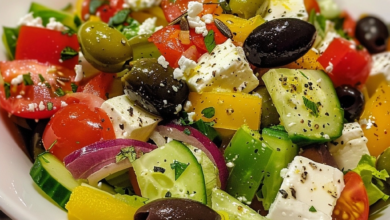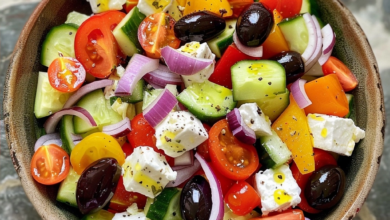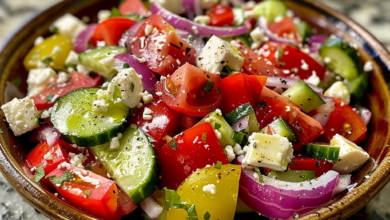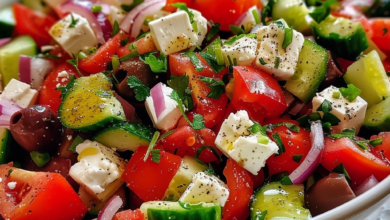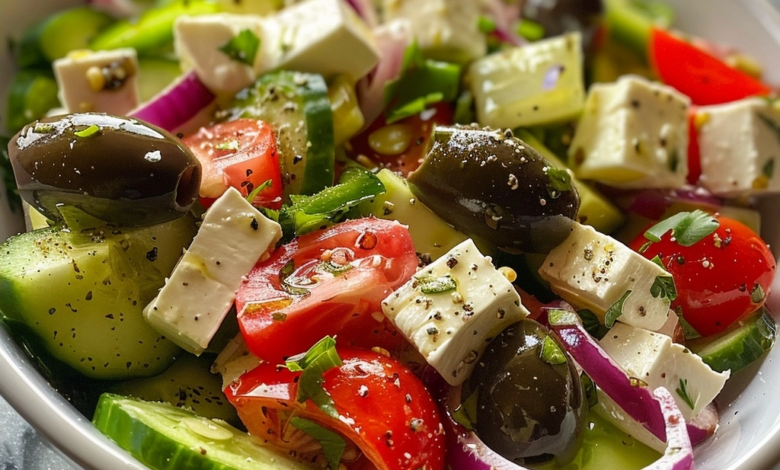
An authentic Greek salad recipe relies on high-quality, sun-ripened vegetables and a generous block of feta cheese without any lettuce fillers. This traditional dish emphasizes freshness and specific regional techniques to achieve the classic Mediterranean profile. Every ingredient plays a vital role in creating the iconic flavor residents of Greece expect from a healthy summer meal. Following these specific steps ensures your result remains consistently delicious and perfectly balanced among salty, acidic, and sweet notes.
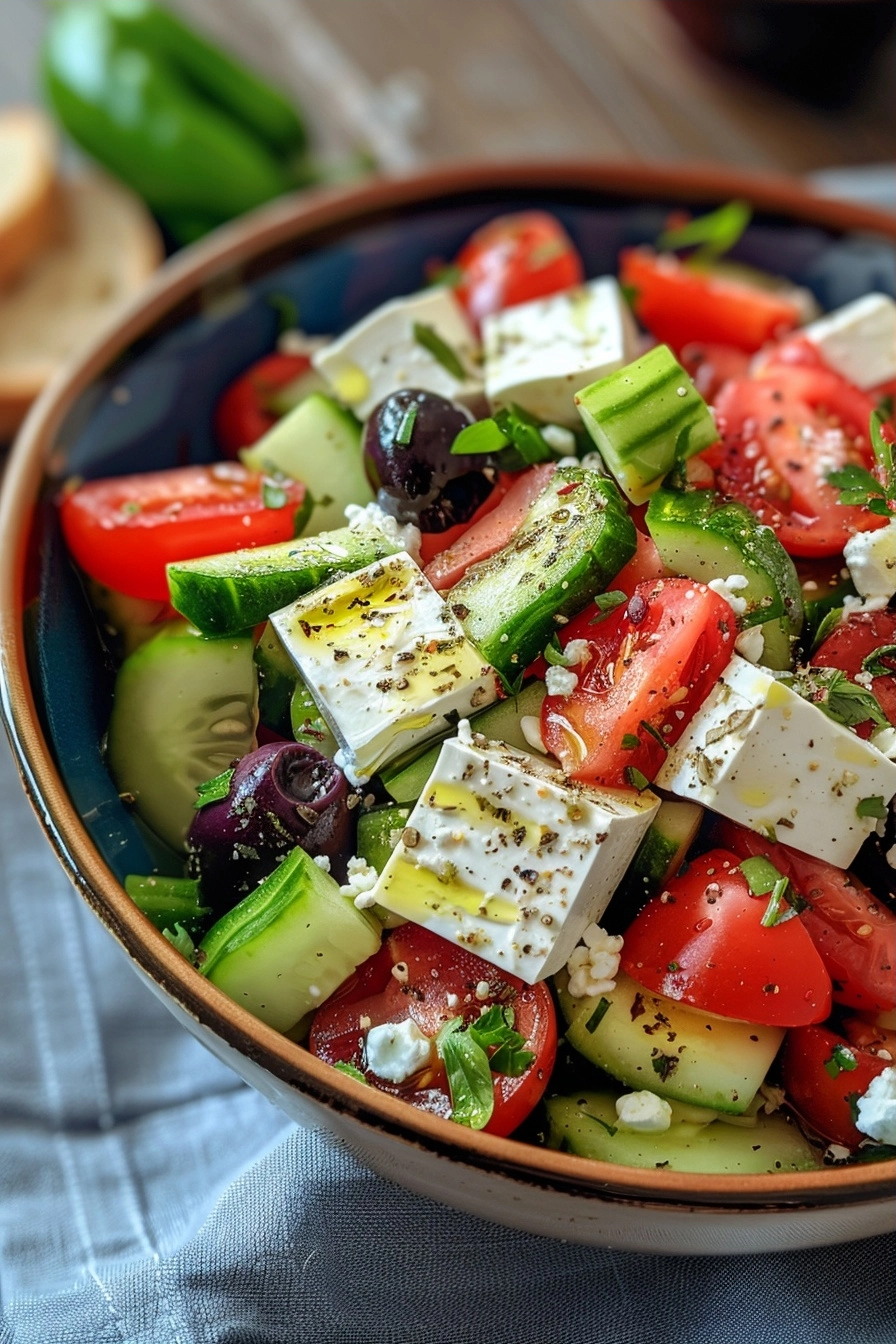
Recipe Overview
| Attribute | Details |
|---|---|
| Prep Time | 15 minutes |
| Total Time | 15 minutes |
| Servings | 4 servings |
| Difficulty | Easy |
| Cuisine | Greek |
Why This Recipe Works
This recipe works because it honors the original Horiatiki standards by excluding lettuce, which quickly wilts and dilutes the dressing. Using firm, vine-ripened tomatoes and thick, hand-cut pieces of feta ensures each forkful delivers the intended textural contrast. My experience living in the Mediterranean taught me that the quality of your extra virgin olive oil determines the success of the entire salad bowl.
Authenticity stems from the specific preparation of the vegetable chunks rather than uniform, tiny dices. By leaving the vegetables in rustic, larger pieces, you prevent the salad from becoming soggy or watery before it reaches the dinner table. This approach maximizes the shelf life and ensures that every bite features distinct, flavorful, and crunchy produce.
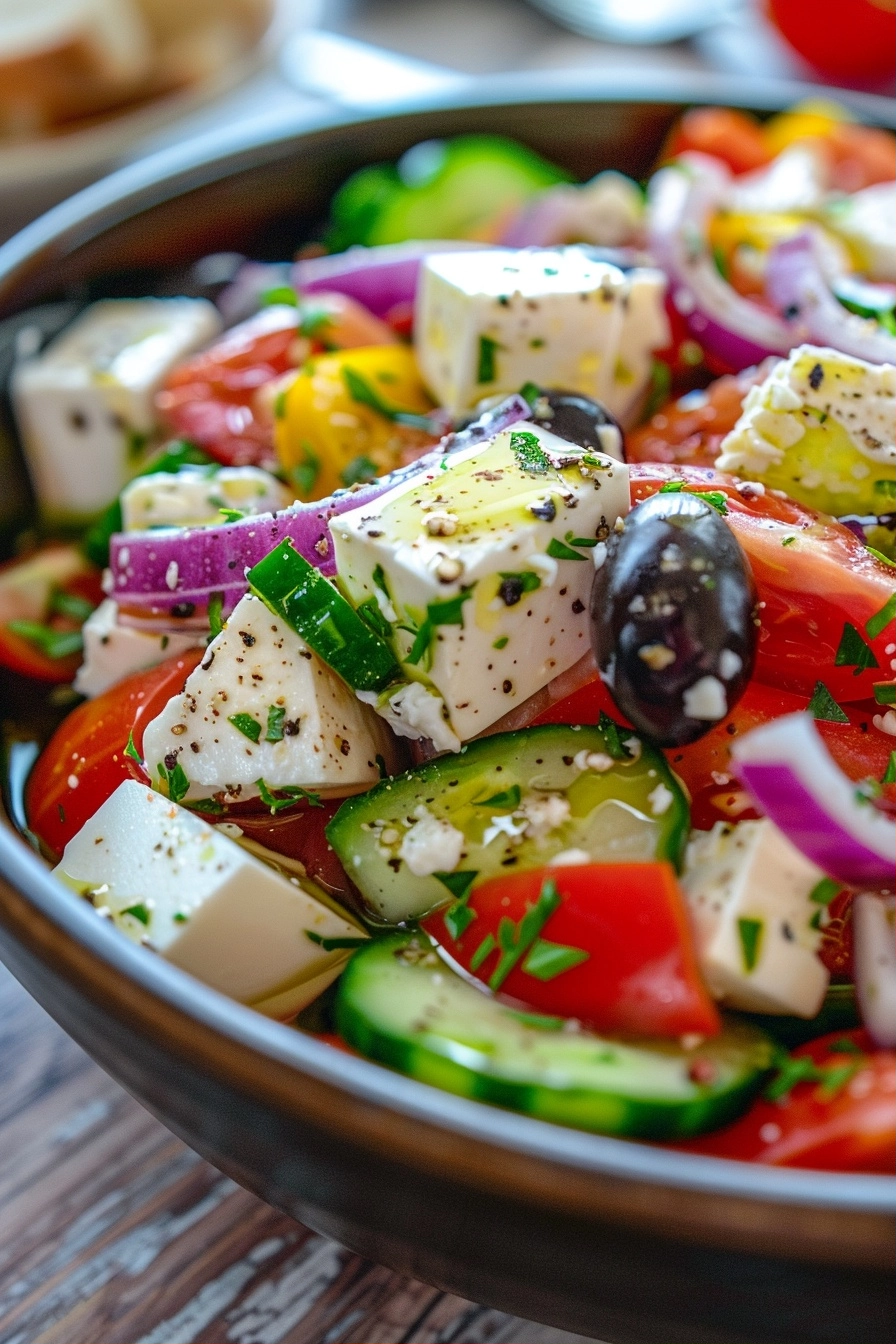
Ingredients
| Ingredient | Quantity | Notes |
|---|---|---|
| Vine-ripened Tomatoes | 4 large | Must be room temperature |
| English Cucumber | 1 large | Sliced into half-moons |
| Kalamata Olives | 1/2 cup | Pitted for convenience |
| Red Onion | 1/2 small | Thinly sliced into slivers |
| Green Bell Pepper | 1 medium | Sliced into strips |
| Feta Cheese | 7 oz | Block style, not pre-crumbled |
| Extra Virgin Olive Oil | 3 tbsp | High-quality Greek origin |
| Dried Oregano | 1 tsp | Hand-crushed to release oils |
Step-by-Step Instructions
Prep the Produce
Wash all vegetables thoroughly under cold water to ensure they are clean and free of potential debris.
Chop the Vegetables
Slice the tomatoes into irregular thick wedges and cut the cucumber into half-moon slices roughly half an inch thick.
Slice the Aromatics
Thinly shave the red onion and slice the green bell pepper into uniform, bite-sized strips for optimal distribution.
Assemble the Base
Combine the tomatoes, cucumbers, onions, and bell pepper in a wide, non-reactive mixing bowl to prevent metallic off-flavors.
Add Olives and Seasoning
Toss the Kalamata olives into the bowl and sprinkle half of the dried oregano over the vegetable mixture.
Incorporate the Feta
Place the block of feta cheese on top of the vegetables or break it into large distinct chunks, then drizzle generously with high-quality olive oil.
Finish and Serve
Sprinkle the remaining oregano over the cheese and serve the salad immediately at room temperature.
Chef Tips for Perfect Results
- Always use room temperature tomatoes to ensure the full spectrum of their inherent sweetness and acidity displays properly.
- Keep the feta in large blocks rather than crumbling it, as the block form provides a superior mouthfeel and aesthetic.
- Select Greek extra virgin olive oil specifically, as it offers a robust, peppery profile that mass-market oils cannot replicate.
- Use your hands to crush the dried oregano directly over the salad; this simple action releases essential oils trapped in the dried herb.
- Avoid salting the vegetables directly, as the feta and olives provide sufficient sodium levels to season the entire dish naturally.
Common Mistakes to Avoid
- Adding lettuce ruins the integrity of a traditional Horiatiki because the leaves wilt and dilute the savory olive oil dressing.
- Using pre-crumbled feta results in dry, flavorless texture; always purchase the brine-soaked blocks instead for creaminess.
- Refrigerating the salad for too long makes the tomatoes grainy; keep components at room temperature for the best experience.
- Dicing vegetables into tiny pieces creates a mushy texture; keep the chunks large and rustic for structural integrity.
Variations and Substitutions
| Ingredient | Substitution | Impact |
|---|---|---|
| Green Pepper | Yellow Bell Pepper | Sweeter final profile |
| Red Onion | Spring Onion | Milder, fresher bite |
| Kalamata Olives | Black Cured Olives | Less salty and fruity |
Serving Suggestions and Pairings
Serve this salad alongside grilled chicken skewers or Mediterranean-style roasted legumes for a complete balanced meal. It pairs perfectly with warm pita bread, which serves as an ideal tool for soaking up the residual olive oil and tomato juices at the bottom of the bowl. This dish fits beautifully as a side during outdoor summer gatherings or as a light lunch.
Storage and Reheating
| Method | Duration | Instructions |
|---|---|---|
| Countertop | 1 hour | Best consumed immediately at room temperature |
| Refrigerator | 24 hours | Store in an airtight container without adding salt until serving |
Nutritional Information
Approximate values per serving.
| Nutrient | Amount per Serving |
|---|---|
| Calories | 185 kcal |
| Protein | 6g |
| Fat | 14g |
| Carbohydrates | 9g |
| Fiber | 2g |
Frequently Asked Questions
Can I use low-fat feta in this recipe?
Avoid using low-fat feta because it lacks the necessary creaminess and distinct brine profile essential for a traditional Mediterranean salad flavor. High-fat, traditional sheep or goat milk feta provides the rich texture required to complement the acidity of the tomatoes.
How do I prevent the salad from becoming watery?
Keep the dish from becoming watery by avoiding salt during the preparation phase and ensuring you do not over-mix the bowl. The salt in the feta and olives is sufficient, and adding table salt draws excess moisture out of the vegetables too quickly.
Can I assemble this salad hours in advance?
Assemble the salad no more than an hour before serving to maintain the crisp texture of the bell peppers and cucumbers. Prepared too far in advance, the vegetables lose their structural integrity as the acidity in the tomatoes affects the other ingredients.
What is the best alternative to Kalamata olives?
Use salt-cured black olives if you cannot find Kalamata, as they offer a similar depth of flavor and texture. Avoid canned black olives, as they do not provide the necessary intensity to stand up against the bold flavor of the feta cheese.
Why should the tomatoes be at room temperature?
Use room temperature tomatoes because cold temperatures mute their natural sweetness and aromatic qualities, which are essential for this recipe. Refrigeration fundamentally alters the cellular structure of tomatoes, turning them soft and bland compared to those stored on the counter.
Conclusion
Mastering an authentic Greek salad recipe requires minimal effort but demands strict attention to ingredient quality and preparation size. By honoring the tradition of using large vegetable chunks and premium feta, you create a refreshing dish perfect for any occasion. Embrace the simplicity of the Mediterranean lifestyle and focus on the freshness of your produce. With every bite, the combination of tangy olives, creamy cheese, and crisp peppers brings the spirit of the Greek islands directly to your home kitchen.
Print
Authentic Cretan-Style Greek Salad
- Total Time: 15
- Yield: 4 servings 1x
- Diet: Vegetarian
Description
Experience the true essence of the Mediterranean with this authentic Horiatiki salad. By utilizing firm, vine-ripened tomatoes and hand-cut feta, this traditional dish focuses on rustic textures and premium ingredients. Without any lettuce fillers, this salad highlights the vibrant freshness of sun-ripened vegetables combined with high-quality extra virgin olive oil and the sharp, salty punch of Kalamata olives for a perfect, refreshing summer meal.
Ingredients
4 large vine-ripened tomatoes, at room temperature
1 large English cucumber, sliced into half-moons
1/2 cup pitted Kalamata olives
1/2 small red onion, thinly sliced
1 medium green bell pepper, sliced into strips
7 oz feta cheese, block style
3 tbsp high-quality extra virgin olive oil
1 tsp dried oregano, hand-crushed
Instructions
Wash all produce thoroughly under cold water.
Slice tomatoes into rustic, thick wedges.
Cut the English cucumber into half-moon slices roughly half an inch thick.
Thinly shave the red onion into delicate slivers.
Slice the green bell pepper into uniform, thin, bite-sized strips.
Combine the prepared vegetables and olives in a large serving bowl.
Place the block of feta cheese on top of the salad.
Drizzle with the high-quality extra virgin olive oil.
Sprinkle with the hand-crushed dried oregano before serving.
Notes
Ensure your tomatoes are at room temperature to maximize flavor. Use a high-quality Greek extra virgin olive oil for the best results. The feta should be kept in a single block rather than pre-crumbled to maintain the integrity of the dish.
- Prep Time: 15
- Category: Trends Recipes
- Method: No-cook
- Cuisine: Greek
Nutrition
- Serving Size: 1.5 cups
- Calories: 210
- Sugar: 5g
- Sodium: 480mg
- Fat: 16g
- Saturated Fat: 6g
- Carbohydrates: 9g
- Fiber: 2g
- Protein: 8g
- Cholesterol: 25mg