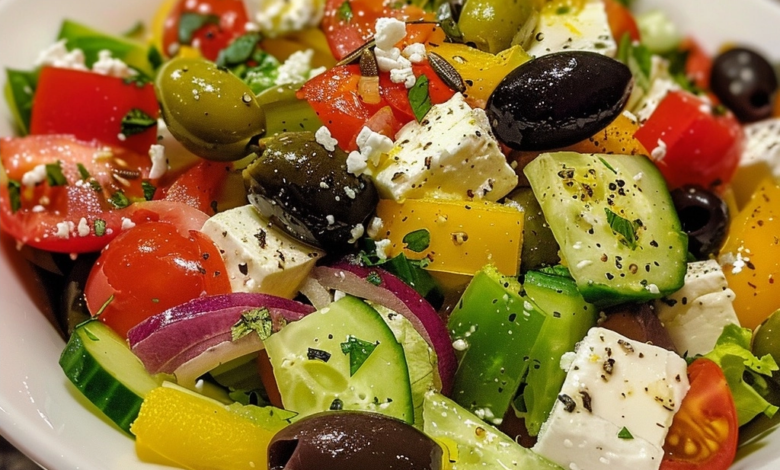
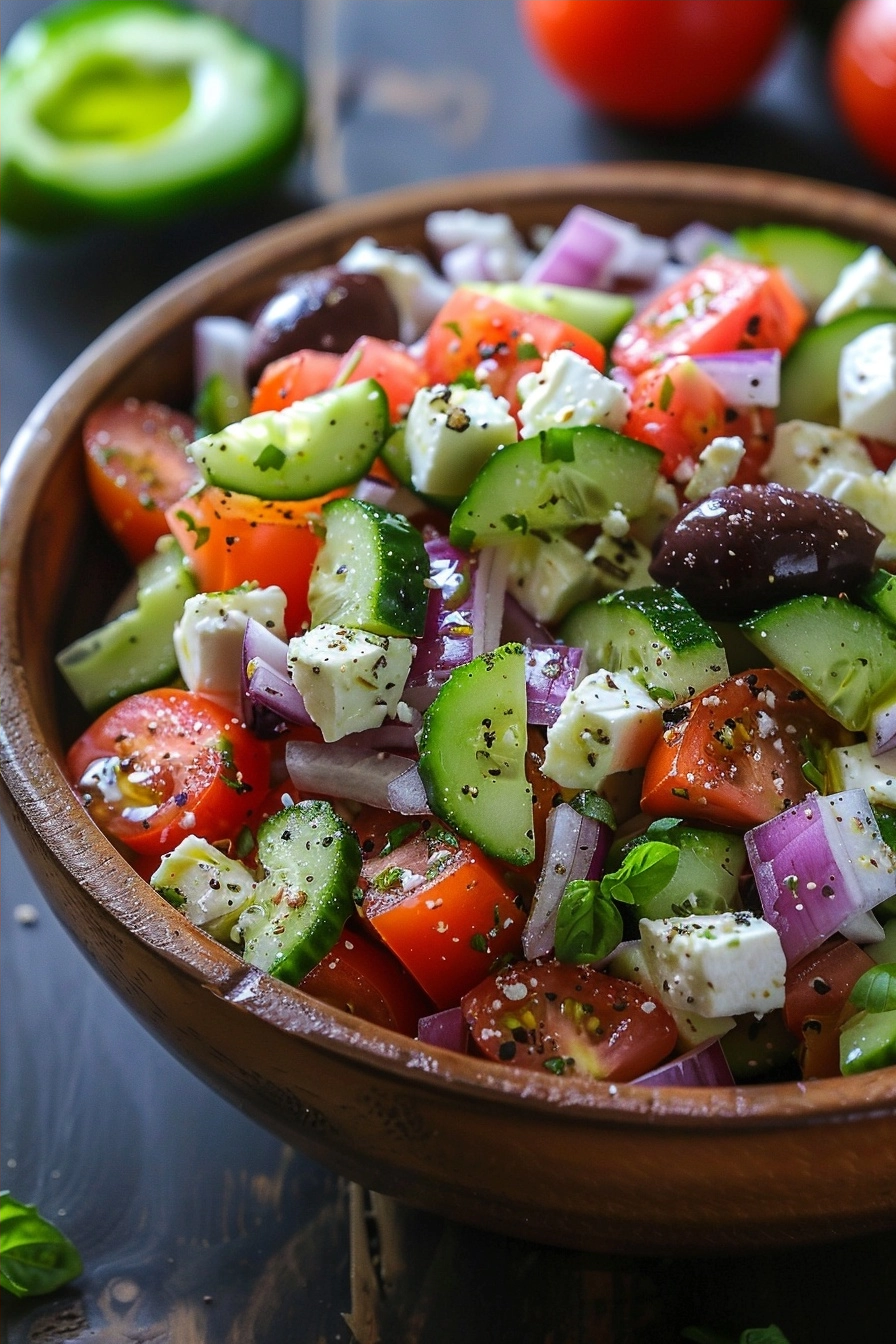
The best Greek salad recipe features crisp cucumbers, vine-ripened tomatoes, briny kalamata olives, and authentic block feta cheese tossed in a simple vinaigrette. This classic Mediterranean dish relies on high-quality, fresh produce to deliver an unparalleled crunch and refreshing acidity. Mastering this salad requires understanding the balance of texture and seasoning found in traditional Greek kitchens.
| Prep Time | Cook Time | Total Time | Servings | Difficulty | Cuisine |
|---|---|---|---|---|---|
| 15 mins | 0 mins | 15 mins | 4 | Easy | Greek |
Why This Recipe Works
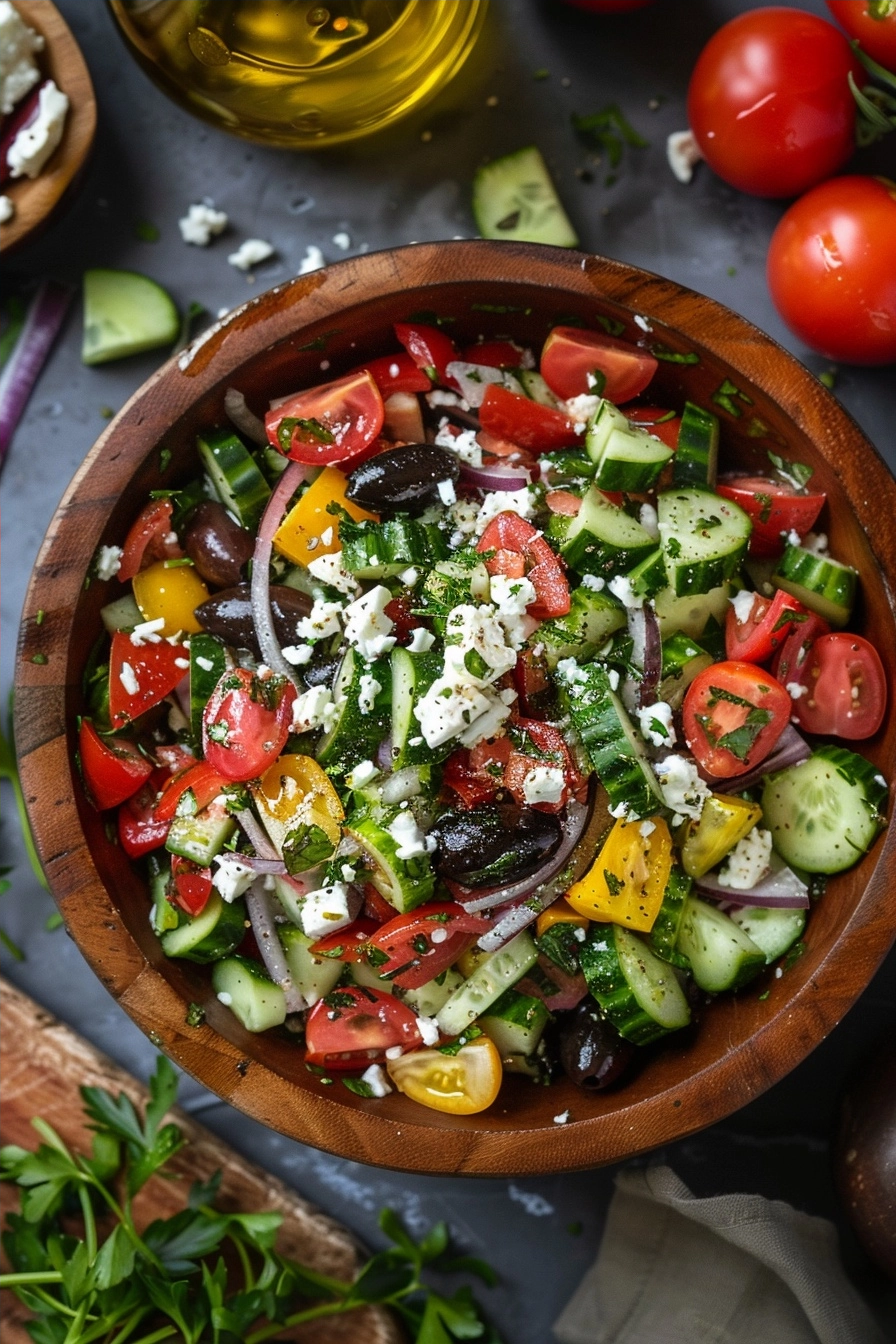
This recipe works because it honors the traditional Horiatiki approach by avoiding lettuce entirely. Modern variations often dilute the bold flavors of the vegetables with watery greens, but a proper Greek salad focuses on the structural integrity of thick-cut cucumbers and juicy tomatoes.
My experience kitchen-testing this salad confirms that hand-cutting the vegetables into large, bite-sized cubes provides the best mouthfeel. When you allow the salt to macerate the vegetables for a few minutes before tossing with the dressing, you create a natural juice that elevates the olive oil into a deeply flavorful vinaigrette.
Ingredients
| Ingredient | Quantity | Notes |
|---|---|---|
| Vine Tomatoes | 4 large | Use heirloom for best flavor |
| English Cucumber | 1 large | Do not peel for extra crunch |
| Kalamata Olives | 1/2 cup | Use pitted for easier eating |
| Red Onion | 1/2 small | Slice super thin |
| Feta Cheese | 8 oz | Always use block, not pre-crumbled |
| Olive Oil | 1/4 cup | Extra-virgin is mandatory |
| Dried Oregano | 1 tsp | Rub between palms to release oils |
Step-by-Step Instructions
Preparation of Vegetables
- Wash all vegetables thoroughly under cold running water.
- Cut tomatoes into large, uneven wedges to maximize surface area.
- Slice the English cucumber into thick half-moons.
- Thinly shave the red onion into translucent strips using a sharp mandoline.
Assembly and Dressing
- Combine the vegetables in a large ceramic mixing bowl.
- Add the kalamata olives to the vegetable mixture.
- Drizzle the high-quality extra-virgin olive oil over the top of the salad.
- Sprinkle the dried oregano and a pinch of sea salt into the bowl.
- Place a half-block of feta cheese on top of the salad rather than mixing it in immediately to keep the aesthetic clean.
Chef Tips for Perfect Results
- Use only cold, crisp vegetables to ensure the salad holds its structure without becoming mushy.
- Choose block feta stored in brine as pre-crumbled varieties contain cellulose that prevents proper flavor blending.
- Rub the dried oregano between your palms directly over the bowl to activate the essential oils.
- Apply the salt just before serving to prevent the tomatoes from weeping too much liquid into the bottom of the bowl.
Common Mistakes to Avoid
- Adding lettuce ruins the texture of the dish. Stick to only the classic vegetables for an authentic experience.
- Using bottled low-quality olive oil dulls the flavor. Use a cold-pressed finishing oil for the best results.
- Cutting the vegetables too small causes them to disintegrate. Keep the pieces large for a satisfying crunch.
- Mixing the cheese too early creates a cloudy, unappealing dressing. Add the feta as the final step.
Variations and Substitutions
| Ingredient | Substitution | Impact |
|---|---|---|
| Red Onion | Shallots | Milder, more subtle bite |
| Kalamata Olives | Green Olives | Higher acidity and lighter color |
| Oregano | Fresh Dill | Adds a slightly herbal, grassy note |
Serving Suggestions and Pairings
This salad functions perfectly as a side to grilled chicken souvlaki or stuffed bell peppers. Serve it alongside crusty sourdough bread to soak up the leftover oil and tomato juices. It is the ultimate seasonal addition to any outdoor weekend barbecue.
Storage and Reheating
| Method | Duration | Instructions |
|---|---|---|
| Refrigerator | 24 hours | Store in an airtight container without dressing |
| Freezer | N/A | Do not freeze fresh vegetables |
Nutritional Information
| Nutrient | Amount per Serving |
|---|---|
| Calories | 240 kcal |
| Fat | 18g |
| Protein | 8g |
| Carbohydrates | 9g |
| Fiber | 3g |
Approximate values.
Frequently Asked Questions
Can I make this salad ahead of time?
You should prepare the ingredients and store them separately to maintain freshness. Assemble the salad and add dressing only at the moment of serving to retain the crunch.
What is the best way to substitute feta?
You can substitute feta with manouri, a semi-soft goat or sheep milk cheese. This provides a similar tangy profile and creamy consistency compared to standard feta.
How do I stop my salad from getting watery?
You stop the salad from getting watery by salting the vegetables at the very last minute. Excess salt draws moisture out of the tomatoes and cucumbers too quickly.
Are olives necessary for the flavor?
Kalamata olives are essential for providing the necessary salt and acidity to balance the sweetness of the tomatoes. They contribute a signature savory depth that defines the Mediterranean profile.
Should I wash the vegetables before chopping?
Yes, you must wash all produce under cold water to remove surface debris and bacteria. Drying the vegetables thoroughly with a clean towel after washing ensures the dressing adheres properly.
Conclusion
The best Greek salad recipe relies on simple, high-quality ingredients processed with minimal interference. By focusing on thick-cut vegetables and avoiding unnecessary fillers, you create a refreshing dish that highlights the purity of Mediterranean cooking. Adopt these techniques in your home kitchen to bring the vibrant, zestful spirit of Greece to your table today. Embrace the simplicity of true quality produce and enjoy every refreshing bite.
Print
Authentic Greek Horiatiki Salad
- Total Time: 15
- Yield: 4 servings 1x
- Diet: Vegetarian
Description
Experience the true essence of Mediterranean cooking with this authentic Horiatiki salad. By skipping watery lettuce and focusing on high-quality, cold, crisp vegetables, this recipe delivers an unparalleled crunch. With thick-cut vine-ripened tomatoes, refreshing English cucumbers, briny kalamata olives, and a large slab of creamy block feta, it is seasoned simply with extra-virgin olive oil and fragrant oregano for a clean, bold, and refreshing flavor profile that reflects the spirit of traditional Greek kitchens.
Ingredients
4 large vine-ripened tomatoes
1 large English cucumber
1/2 cup pitted kalamata olives
1/2 small red onion
8 oz block feta cheese
1/4 cup extra-virgin olive oil
1 tsp dried oregano
Sea salt to taste
Instructions
Wash all vegetables thoroughly under cold running water.
Cut the tomatoes into large, uneven wedges to maximize surface area.
Slice the English cucumber into thick half-moons without peeling.
Thinly shave the red onion into translucent strips using a sharp mandoline or knife.
Combine the prepared vegetables in a large ceramic mixing bowl.
Add the kalamata olives to the bowl.
Drizzle the extra-virgin olive oil over the top.
Sprinkle the dried oregano and a pinch of sea salt over the salad.
Place the block of feta cheese on top of the salad to finish, rather than mixing it in immediately.
Notes
Rub the dried oregano between your palms before sprinkling to help release the essential oils. Use a block of feta instead of pre-crumbled to ensure better texture and freshness. Serving the feta as a whole block on top is the traditional way to present the salad. For the best flavor, use high-quality, cold-pressed extra-virgin olive oil.
- Prep Time: 15
- Category: Trends Recipes
- Method: No-cook
- Cuisine: Greek
Nutrition
- Serving Size: 1.5 cups
- Calories: 220
- Sugar: 4g
- Sodium: 450mg
- Fat: 18g
- Saturated Fat: 6g
- Carbohydrates: 9g
- Fiber: 2g
- Protein: 8g
- Cholesterol: 35mg