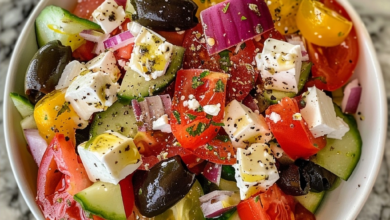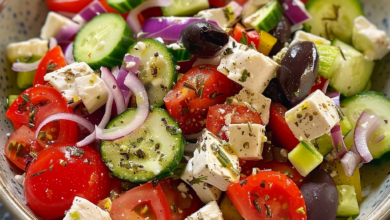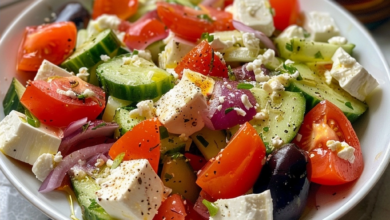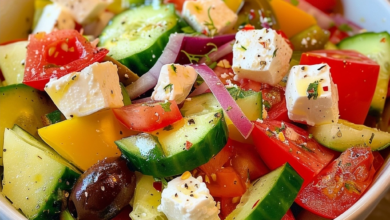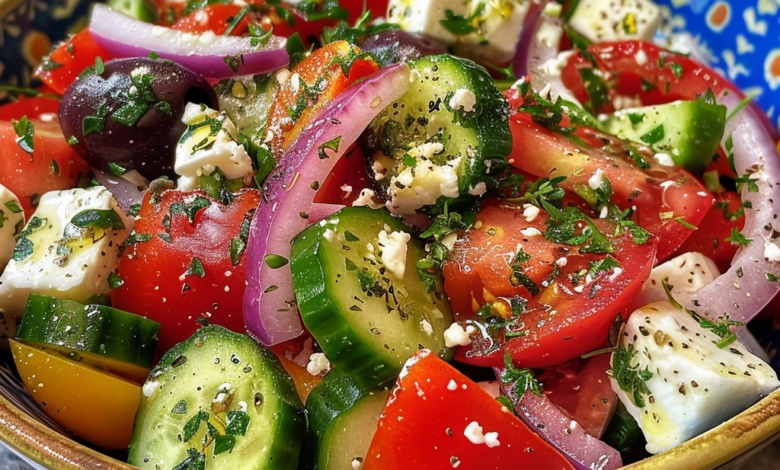
A fresh Mediterranean Greek salad provides a crisp, vibrant combination of authentic vegetables and high-quality feta cheese. This classic dish relies on the quality of its simple, raw ingredients to deliver an unparalleled experience of texture and color. You achieve the best results by choosing garden-fresh produce that highlights the traditional flavors of the Mediterranean diet effectively.
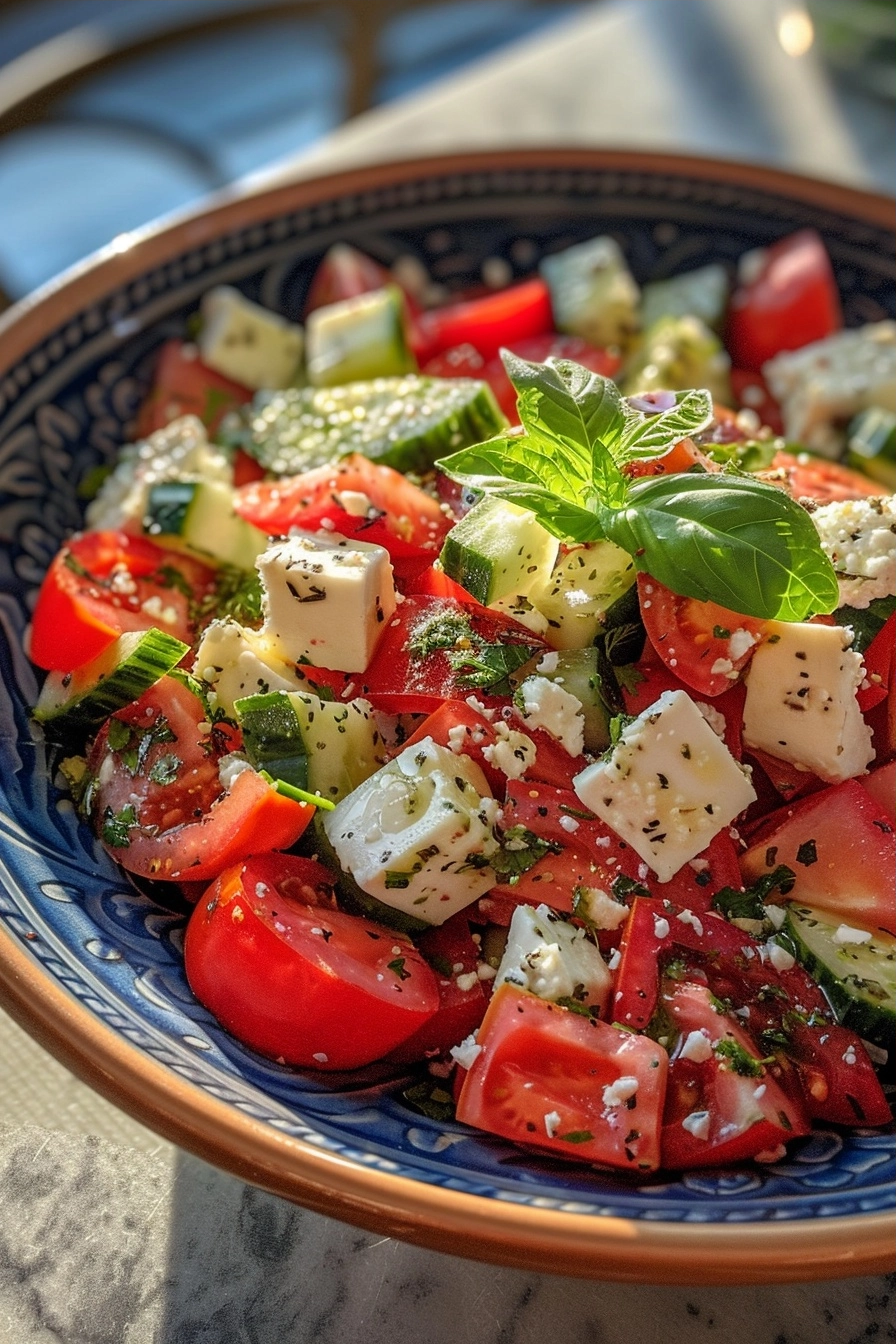
Recipe Overview
| Metric | Details |
|---|---|
| Prep Time | 15 minutes |
| Cook Time | 0 minutes |
| Total Time | 15 minutes |
| Servings | 4 servings |
| Difficulty | Easy |
| Cuisine | Greek |
Why This Recipe Works
This recipe works because it prioritizes the integrity of each individual vegetable rather than masking them with complex dressings. I have spent years refining this balance, finding that the key lies in the acidity of the lemon juice paired with cold-pressed olive oil. This specific combination creates a natural emulsion that coats the cucumbers and peppers without wilting the delicate greens or vegetables.
You will notice that keeping the vegetables in chunky cubes provides a much better mouthfeel than thin slicing. The structural integrity of the tomatoes and cucumbers allows them to soak up the vinaigrette while maintaining a distinct crunch. It remains a staple in my kitchen for both casual weekday lunches and elaborate weekend dinners because it never requires heat to prepare.
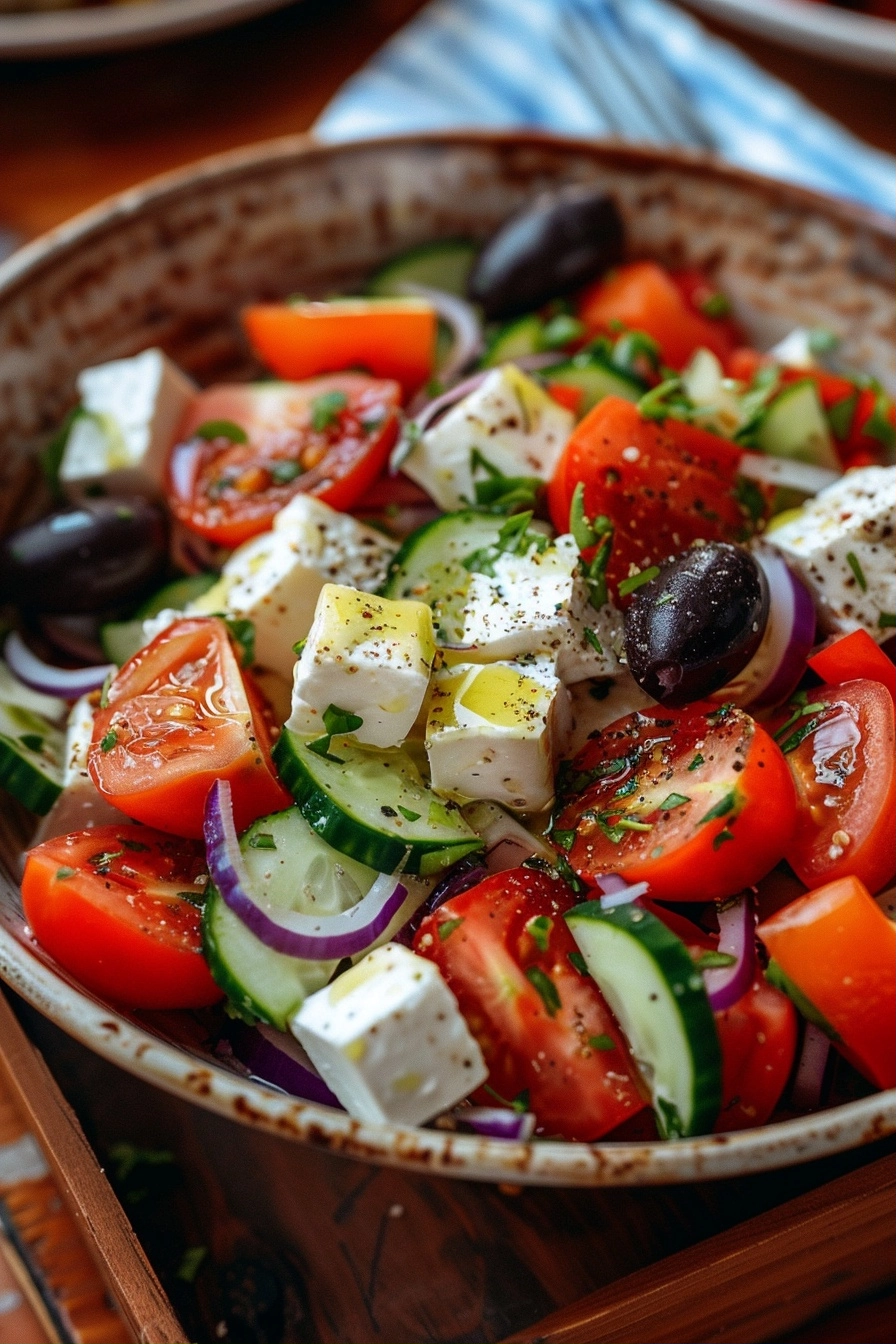
Ingredients
| Ingredient | Quantity | Notes |
|---|---|---|
| English Cucumber | 1 large | Chop into chunks |
| Roma Tomatoes | 4 medium | Use firm, vine-ripened |
| Kalamata Olives | 1/2 cup | Pitted and halved |
| Red Onion | 1/2 small | Thinly sliced |
| Feta Cheese | 6 ounces | Block form preferred |
| Extra Virgin Olive Oil | 3 tablespoons | Cold-pressed |
| Lemon Juice | 2 tablespoons | Freshly squeezed |
| Dried Oregano | 1 teaspoon | Greek variety preferred |
Step-by-Step Instructions
Preparation and Chopping
- Wash all vegetables thoroughly under cold running water to remove impurities.
- Slice the English cucumber into thick half-moons or large chunks for better texture.
- Dice the Roma tomatoes into uniform pieces that match the size of the cucumber chunks.
- Slice the red onion into thin slivers to ensure it distributes evenly throughout the bowl.
Assembly and Dressing
- Combine the chopped vegetables and pitted Kalamata olives in a large glass mixing bowl.
- Whisk the extra virgin olive oil, lemon juice, and dried oregano in a small separate container.
- Pour the dressing over the vegetable mixture and toss gently to coat each piece evenly.
- Add the feta cheese in large, rustic chunks on top instead of pre-crumbled varieties.
Chef Tips for Perfect Results
- Use authentic feta cheese preserved in brine to ensure the creamiest texture and best salt concentration.
- Remove the seeds from the cucumbers if they look overly watery to keep the salad crisp.
- Let the salad sit for ten minutes after dressing so the oregano infuses into the olive oil.
- Season with sea salt sparingly, as the olives and feta already contribute significant salt to the dish.
Common Mistakes to Avoid
- Avoid adding lettuce to this traditional salad, as it dilutes the intensity of the Mediterranean vegetable profile.
- Refrain from pre-crumbling your feta, which prevents it from becoming mushy when you stir the salad.
- Do not over-salt the mixture before tasting, since Kalamata olives inherently bring a high sodium punch.
- Stop using refrigerated tomatoes, as cold temperatures turn the flesh mealy and destroy their natural sugar content.
Variations and Substitutions
| Ingredient | Substitution | Impact on Flavor |
|---|---|---|
| Red Onion | Shallots | Adds a milder, sweeter onion profile. |
| Kalamata Olives | Black olives | Reduces the intensity and saltiness of the salad. |
| Lemon Juice | Red wine vinegar | Provides a sharper, more acidic finish. |
Serving Suggestions and Pairings
Serve this salad alongside grilled proteins like lemon-herb chicken or roasted chickpeas for a complete meal. It also functions as a refreshing side dish for pita bread and hummus during summer gatherings or outdoor picnics. For more inspiration, visit professional culinary resources on salad composition.
Storage and Reheating
| Method | Duration | Instructions |
|---|---|---|
| Refrigerator | 24 hours | Store in an airtight glass container. |
Nutritional Information
| Nutrient | Amount per Serving |
|---|---|
| Calories | 180 kcal |
| Protein | 5g |
| Fat | 14g |
| Carbohydrates | 9g |
Values are approximate estimations based on standard ingredients.
Frequently Asked Questions
Can I make this salad ahead of time?
Yes, you can assemble all components except the dressing and feta cheese up to four hours in advance. Add the dressing and cheese just before serving to maintain the best crunch and texture.
What is the healthiest feta to choose for this recipe?
Selecting sheep or goat milk feta provides higher quality proteins and healthier fats than cow milk alternatives. Choose brands packed in brine to ensure you are getting the most authentic Mediterranean flavor profiles.
Why does my dressing separate?
The dressing separates because it is a simple oil and acid mixture without an emulsifier. Whisk the mixture vigorously immediately before pouring it over the vegetables to ensure even coverage.
How do I stop the tomatoes from making the salad soggy?
Removing the seeds from the tomato centers before chopping significantly lowers the moisture content. Keeping the chunks large also prevents them from releasing too much water into the bottom of the bowl.
Is this recipe suitable for a vegan diet?
This recipe is easily made vegan by replacing the dairy feta with a high-quality almond-based or tofu-based feta alternative. The rest of the salad remains entirely plant-based and follows standard dietary guidelines for vegan meals.
Preparing a fresh Mediterranean Greek salad at home delivers a healthy experience you can enjoy any day of the week. By focusing on firm, high-quality produce and authentic, salty feta, you elevate this simple side into a memorable staple. Embrace the natural acidity and texture of these ingredients for the ultimate Mediterranean taste.
Print
Fresh Mediterranean Greek Salad
- Total Time: 15
- Yield: 4 servings 1x
- Diet: Vegetarian
Description
A vibrant, authentic Mediterranean Greek salad that celebrates the pure, crisp flavors of garden-fresh vegetables. By keeping vegetables in hearty chunks and dressing them in a simple emulsion of cold-pressed olive oil, fresh lemon juice, and fragrant oregano, this salad delivers a perfect textural balance. Topped with crumbled feta and salty Kalamata olives, it is an easy, no-heat dish perfect for any occasion.
Ingredients
1 large English cucumber, chopped into chunks
4 medium Roma tomatoes, diced
1/2 cup Kalamata olives, pitted and halved
1/2 small red onion, thinly sliced
6 ounces feta cheese, block form preferred
3 tablespoons extra virgin olive oil
2 tablespoons fresh lemon juice
1 teaspoon dried Greek oregano
Instructions
Wash all vegetables thoroughly under cold running water.
Slice the English cucumber into thick chunks.
Dice the Roma tomatoes into uniform pieces.
Slice the red onion into thin slivers.
Combine the chopped vegetables and pitted Kalamata olives in a large glass mixing bowl.
Whisk the extra virgin olive oil, fresh lemon juice, and dried oregano together in a small bowl until emulsified.
Pour the dressing over the vegetables and toss gently to coat.
Top with crumbled feta cheese before serving.
Notes
Use a block of feta cheese rather than pre-crumbled to ensure better texture and flavor. Keep the vegetables chilled before assembly for a crisper salad. Serve immediately or let stand for 10 minutes to allow the flavors to meld.
- Prep Time: 15
- Category: Baking
- Method: No-cook
- Cuisine: Greek
Nutrition
- Serving Size: 1.5 cups
- Calories: 210
- Sugar: 4g
- Sodium: 480mg
- Fat: 17g
- Saturated Fat: 6g
- Carbohydrates: 9g
- Fiber: 3g
- Protein: 7g
- Cholesterol: 25mg