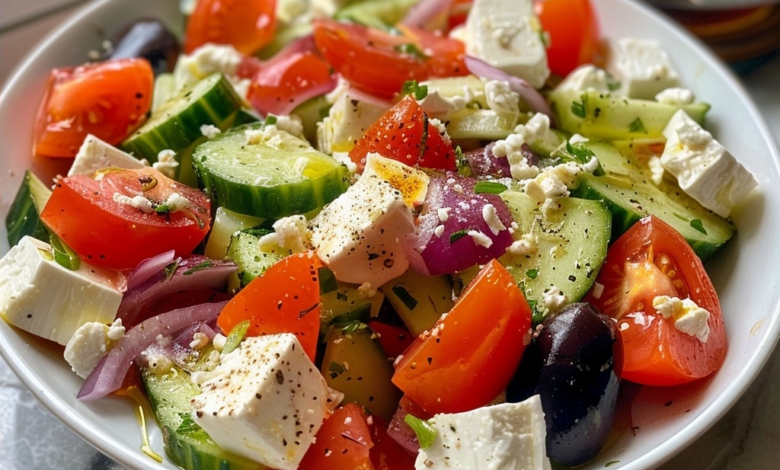
An authentic Greek salad recipe relies on high-quality, sun-ripened produce and a complete absence of lettuce to create a deeply traditional Mediterranean experience. This vibrant dish focuses on the purity of vine-ripened tomatoes, crisp cucumbers, briny kalamata olives, and a generous block of creamy feta cheese. You maintain the integrity of Aegean culinary history by using fresh ingredients exclusively without adding filler vegetables that dilute the classic flavor profile.
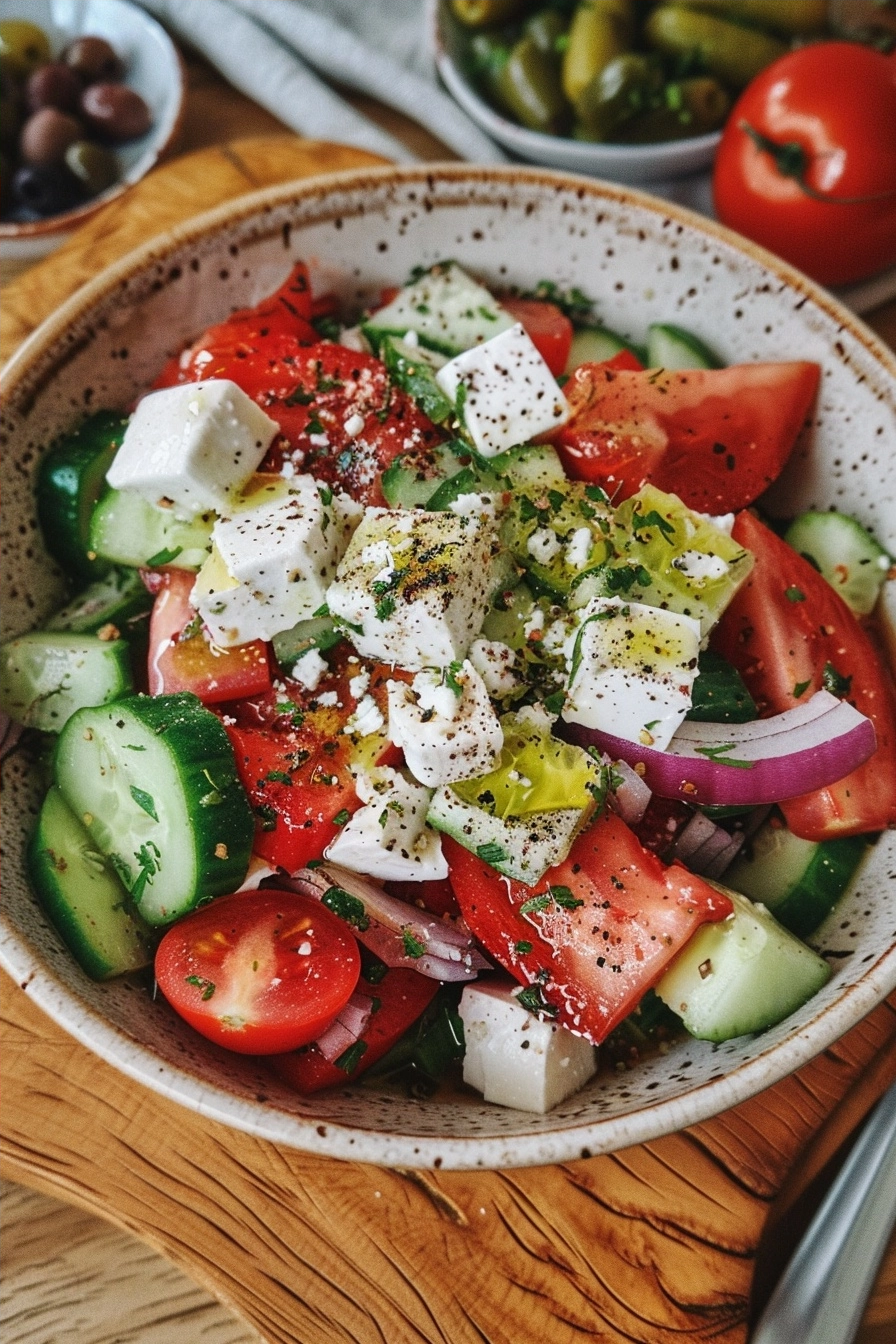
Recipe Overview
| Metric | Details |
|---|---|
| Prep Time | 15 minutes |
| Cook Time | 0 minutes |
| Total Time | 15 minutes |
| Servings | 4 servings |
| Difficulty | Easy |
| Cuisine | Greek |
Why This Recipe Works
I perfected this authentic Greek salad recipe after several trips to seaside tavernas where simplicity remains the ultimate sophistication. By ditching the standard iceberg lettuce found in modern adaptations, you allow the natural juices of the tomatoes to interact directly with the olive oil and oregano. This creates a natural vinaigrette at the bottom of your serving bowl that demands to be mopped up with crusty bread.
The secret lies in the quality of the ingredients you select at the market. A high-grade extra virgin olive oil provides a fruity undertone that connects the sharp bite of red onion with the salty creaminess of authentic Greek feta. Following these traditional methods ensures your salad remains crisp, refreshing, and entirely devoid of the soggy texture often associated with poorly prepared mass-market salads.
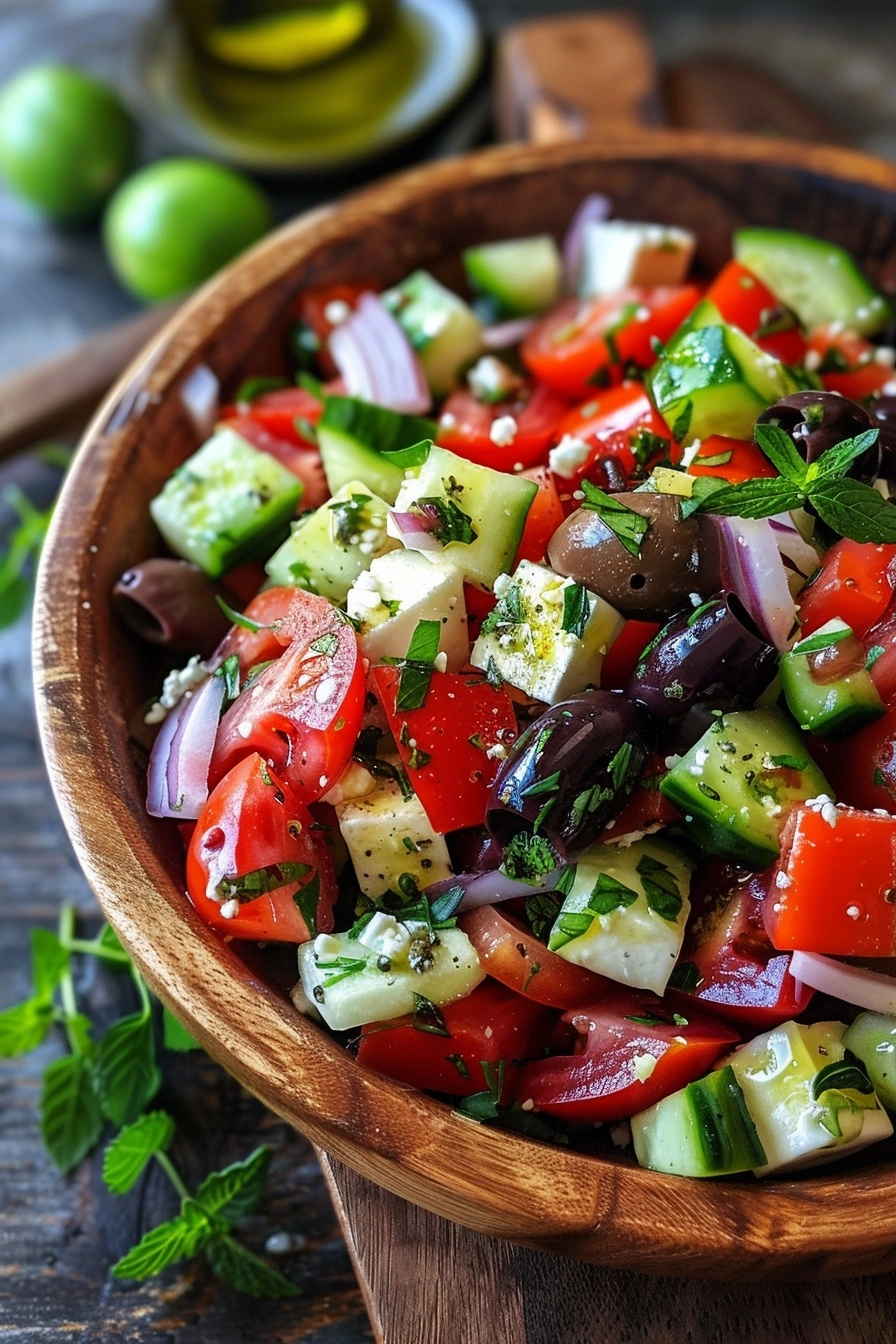
Ingredients
| Ingredient | Quantity | Notes |
|---|---|---|
| Vine-Ripened Tomatoes | 4 large | Must be room temperature |
| English Cucumber | 1 large | Cut into thick semi-circles |
| Red Onion | 0.5 small | Soak in cold water to reduce bite |
| Kalamata Olives | 0.5 cup | Pitted for easy serving |
| Greek Feta Cheese | 200 grams | Use a solid block, not pre-crumbled |
| Extra Virgin Olive Oil | 4 tbsp | Cold-pressed high quality |
| Dried Oregano | 1 tsp | Rub between palms to release oils |
| Sea Salt | To taste | Avoid fine table salt |
Step-by-Step Instructions
Preparation of Produce
- Wash all vegetables thoroughly under cold running water before drying them completely with a clean towel.
- Slice the tomatoes into large, bite-sized wedges to maintain their structure during mixing.
- Chop the cucumber into thick half-moons while leaving the skin on for added texture.
- Thinly slice the red onion into uniform half-rings to ensure a balanced distribution of flavor.
Assembly and Seasoning
- Combine the tomatoes, cucumbers, onion, and olives in a shallow wooden or ceramic serving bowl.
- Place the large, uncut block of feta cheese directly on top of the mixed vegetables.
- Drizzle the extra virgin olive oil evenly over the entire salad surface.
- Sprinkle the dried oregano and a pinch of sea salt over the feta and vegetables to finish.
Chef Tips for Perfect Results
- Always use room temperature tomatoes because refrigeration kills their natural sweetness and cellular structure.
- Select a block of PDO-certified Greek feta stored in brine to ensure you get the most authentic saltiness.
- Marinate the red onion slices in a bowl of ice water for ten minutes before adding to remove the harsh sulfurous aftertaste.
- Hand-crush the dried oregano between your palms directly over the bowl to activate the essential oils trapped within the leaves.
- Serve the salad in a wide, shallow bowl so that the juices settle at the bottom and create a perfect dressing.
Common Mistakes to Avoid
Many home cooks make the mistake of using standard table salt, which is too aggressive for the delicate balance of this salad. Switch to flaky sea salt to avoid over-seasoning the vegetables. Another error involves pre-crumbling the feta cheese, as this releases too much moisture and destroys the intended textural contrast. Keep the cheese as a large slab or large cubes until the moment of service to keep it creamy. Do not store the salad with the dressing, as the salt will pull moisture from the cucumbers and turn the dish into a watery mess within minutes. Finally, avoid adding vinegar, as traditional recipes rely solely on the acidity of the tomatoes and the olive oil.
Variations and Substitutions
| Ingredient | Substitution | Flavor Impact |
|---|---|---|
| Kalamata Olives | Black Niçoise olives | Less briny, more delicate profile |
| Red Onion | Shallots | Milder, sweeter, and more refined |
| Feta Cheese | Manouri cheese | Creamier with a milky finish |
Serving Suggestions and Pairings
This salad functions as the perfect centerpiece for a summer barbecue featuring grilled vegetable skewers or roasted lemon potatoes. Serve it alongside warm pita bread to soak up the leftover oil and tomato juices known as “papara.” It pairs exceptionally well with lean grilled chicken or white fish, making it a versatile side dish for both casual lunches and formal dinner occasions.
Storage and Reheating
| Method | Duration | Instructions |
|---|---|---|
| Countertop | N/A | Best consumed immediately upon preparation |
| Refrigerator | 2 hours | Place in airtight container if absolutely necessary |
Nutritional Information (Approximate values)
| Nutrient | Amount per Serving |
|---|---|
| Calories | 180 kcal |
| Protein | 6g |
| Fat | 14g |
| Carbohydrates | 9g |
| Fiber | 2g |
Frequently Asked Questions
Can I use goat cheese instead of feta?
You can use goat cheese, but the salad will lose its characteristic sharp, briny kick typically provided by sheep or goat milk feta. The texture of goat cheese also melts faster, which changes the integrity of the dish.
How do I stop my salad from getting watery?
You prevent wateriness by adding the salt and olive oil only seconds before serving. Removing the excess seeds from the cucumber can also significantly reduce fluid buildup in the bowl.
Is balsamic vinegar allowed in authentic recipes?
Traditional Greek recipes strictly exclude vinegar, as they prioritize the acidic profile of fresh tomatoes and high-quality olive oil. Adding balsamic vinegar masks the fresh, clean flavors that define this Mediterranean staple.
Can this be prepared in advance?
You should avoid preparing this salad in advance because it loses its crispness when exposed to salt and oil for extended periods. Prep the vegetables individually and keep them separate until the final assembly.
Why is there no lettuce in this salad?
Lettuce serves as a filler ingredient that does not belong in a traditional Greek salad, which focuses entirely on prime seasonal produce. The absence of greens allows the individual profile of each vegetable to stand out clearly.
Embracing the simplicity of these ingredients guarantees a healthy meal that brings the Mediterranean sunshine directly to your kitchen table. By sourcing the best possible tomatoes and feta, you recreate a classic dish that prioritizes quality over culinary complexity. Master the technique of room-temperature assembly and enjoy the authentic, rustic experience of a genuine Greek salad any day of the week.
Print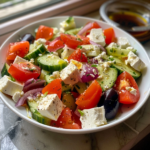
Authentic Greek Salad
- Total Time: 15
- Yield: 4 servings 1x
- Diet: Vegetarian
Description
Experience the true essence of the Mediterranean with this authentic Greek salad. Crafted without lettuce, this vibrant dish focuses on the purity of vine-ripened tomatoes, crisp cucumbers, briny kalamata olives, and a sturdy block of creamy feta cheese. Finished with high-quality extra virgin olive oil and fragrant dried oregano, it creates a fresh and tradition-rich flavor profile that is both simple and sophisticated. Perfect as a standalone lunch or a healthy side dish.
Ingredients
4 large vine-ripened tomatoes
1 large English cucumber
0.5 small red onion
0.5 cup kalamata olives (pitted)
200 grams Greek feta cheese (block form)
4 tbsp extra virgin olive oil
1 tsp dried oregano
Sea salt to taste
Instructions
Wash all produce thoroughly and dry completely with a clean towel.
Slice the tomatoes into large, bite-sized wedges.
Chop the cucumber into thick semi-circles with the skin left on.
Slice the red onion thinly and soak in cold water for 5-10 minutes to reduce the sharpness.
Combine tomatoes, cucumbers, and onions in a mixing bowl.
Add the pitted kalamata olives.
Place the block of feta cheese on top of the vegetables.
Drizzle the extra virgin olive oil over the entire salad.
Sprinkle with dried oregano and finish with sea salt to taste.
Notes
Always use room temperature tomatoes for the best flavor release. Rub the dried oregano between your palms before sprinkling to help release the essential oils. Always use a solid block of feta rather than pre-crumbled for superior texture and flavor.
- Prep Time: 15
- Category: Baking
- Method: No-cook
- Cuisine: Greek
Nutrition
- Serving Size: 1 serving
- Calories: 210
- Sugar: 5g
- Sodium: 450mg
- Fat: 16g
- Saturated Fat: 6g
- Carbohydrates: 9g
- Fiber: 2g
- Protein: 8g
- Cholesterol: 30mg