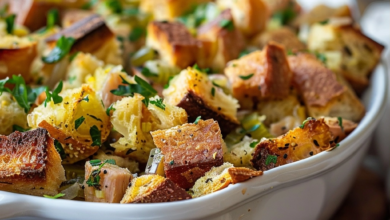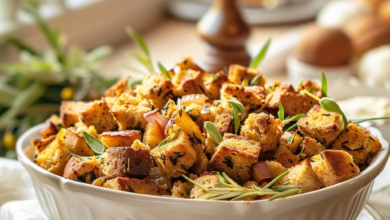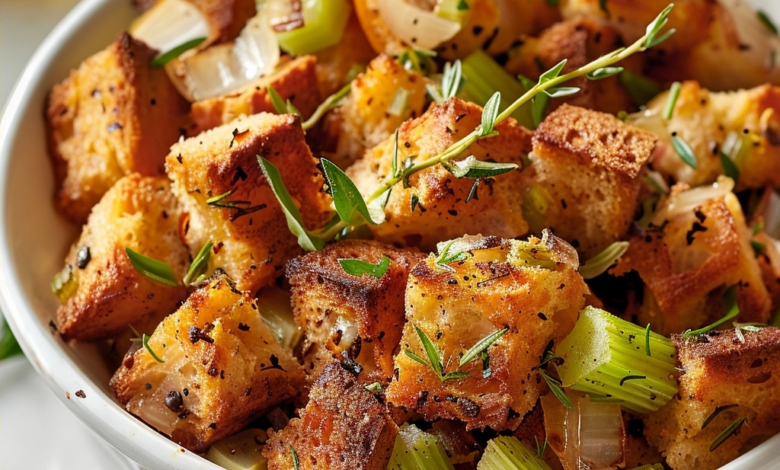
Easy traditional bread stuffing with celery and onions serves as the ultimate savory side dish for roasted poultry and holiday gatherings. This classic recipe relies on simple, high-quality ingredients like cubed bread, aromatic vegetables, and fresh herbs to create a perfect texture that stays moist inside while crisping up on top. Mastering this staple comfort food requires only basic techniques and a handful of pantry essentials to elevate your next festive dinner table.
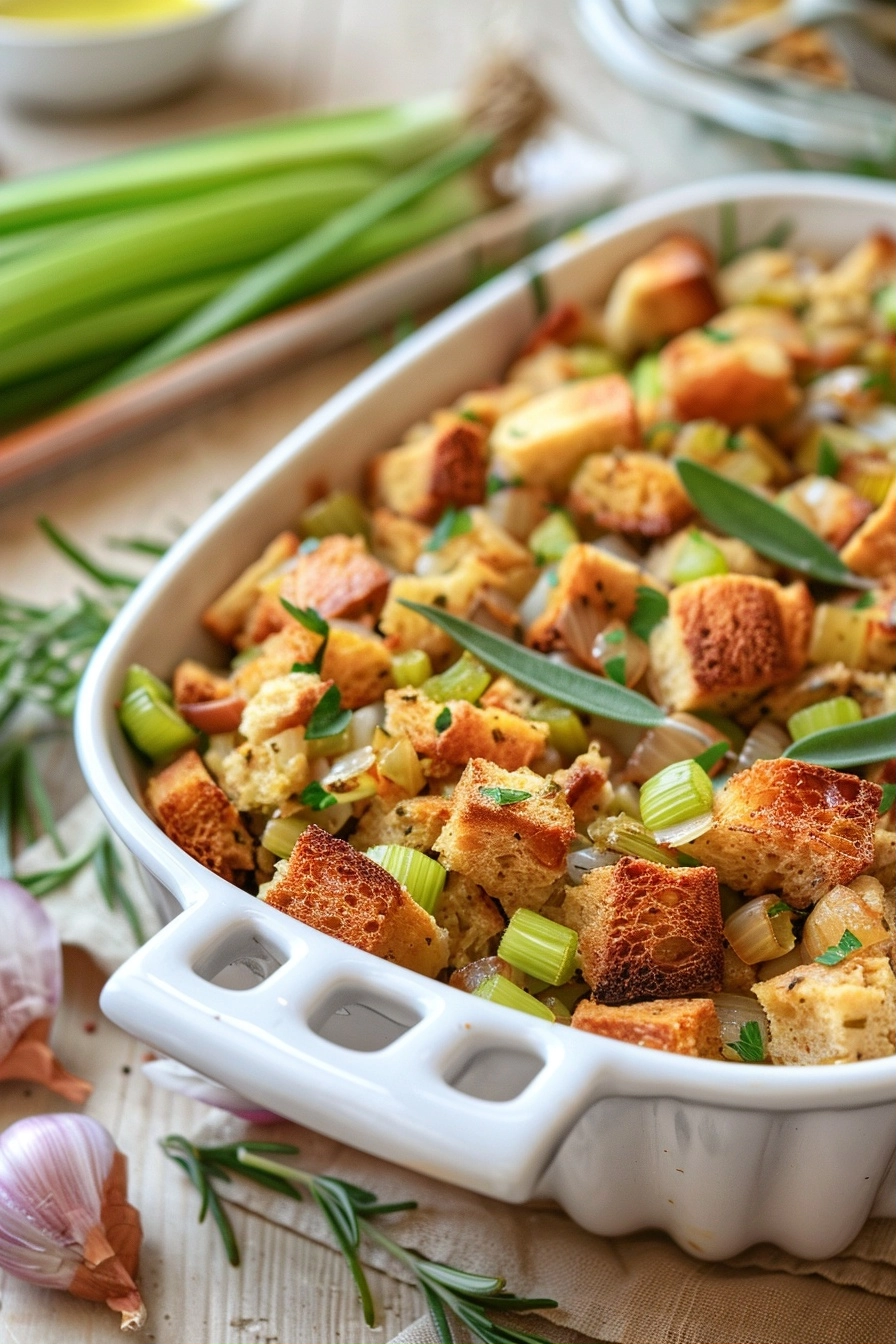
Recipe Overview
| Attribute | Details |
|---|---|
| Prep Time | 20 minutes |
| Cook Time | 45 minutes |
| Total Time | 65 minutes |
| Servings | 8-10 servings |
| Difficulty | Easy |
| Cuisine | American Traditional |
Why This Recipe Works
This recipe works because it balances the crunch of toasted bread cubes with the tender sweetness of sautéed aromatics. I developed this method after testing numerous ratios to ensure the stuffing never turns into a soggy mush or remains overly dry after baking.
The secret lies in the specific ratio of melted butter to low-sodium vegetable broth which provides moisture without overpowering the delicate flavor of the sage and thyme. You will find that this consistent technique delivers reliable results every time you prepare it for family gatherings.
Ingredients
| Ingredient | Quantity | Notes |
|---|---|---|
| White Bread Cubes | 12 cups | Use day-old bread for better absorption |
| Unsalted Butter | 1 cup | Substitute with vegan margarine for dairy-free |
| Yellow Onion | 2 cups, diced | Can use sweet onions for milder flavor |
| Celery Stalks | 2 cups, diced | Includes leaves for extra earthiness |
| Vegetable Broth | 2.5 cups | Ensure it is high-quality and low-sodium |
| Fresh Sage | 1 tablespoon, minced | Dried sage works at 1 teaspoon ratio |
| Fresh Thyme | 1 tablespoon, chopped | Adds a bright herbal finish |
| Salt and Pepper | To taste | Adjust based on broth saltiness |
Step-by-Step Instructions
Preparation Phase
- Preheat your oven to 375 degrees Fahrenheit to ensure even baking.
- Spread bread cubes onto a large rimmed baking sheet in a single layer.
- Toast the bread cubes for 10 minutes until they feel firm and slightly golden.
Aromatic Sauté Phase
- Melt the butter in a large skillet over medium-high heat until it begins to foam.
- Add the diced onions and celery to the hot skillet carefully.
- Sauté the vegetables for 8 minutes until they become translucent and soft.
- Stir in the fresh sage and thyme to release their aromatic oils.
Assembly and Baking Phase
- Combine the toasted bread and sautéed vegetables in an extra-large mixing bowl.
- Pour the vegetable broth over the mixture in small, steady increments.
- Toss the stuffing gently to moisten the bread without crushing the cubes.
- Transfer the mixture to a buttered 9×13 inch casserole dish.
- Bake the stuffing covered for 20 minutes to trap the moisture.
- Remove the cover and bake for an additional 20 minutes to crisp the surface.
Chef Tips for Perfect Results
- Always use day-old bread because fresh bread contains too much moisture and results in a gummy texture.
- Toast your bread cubes thoroughly to create a sturdy structure that holds up against the broth.
- Use room temperature broth so that the butter does not solidify upon contact with the liquid.
- Fresh herbs significantly outperform dried versions in this recipe for a vibrant, garden-fresh flavor profile.
- Cover the dish tightly during the first half of baking to steam the internal components evenly.
Common Mistakes to Avoid
- Adding too much liquid turns the stuffing into a pudding, so add broth one cup at a time.
- Cutting vegetables too large creates uneven cooking, so keep the onion and celery dice uniform.
- Overmixing the ingredients breaks the bread cubes, so fold the mixture delicately with a large spatula.
- Failing to season the vegetables while sautéing leaves the dish bland, so sprinkle salt at each stage.
Variations and Substitutions
| Ingredient | Substitution | Impact on Flavor |
|---|---|---|
| White Bread | Cornbread | Adds a slightly sweet and crumbly texture |
| Vegetable Broth | Mushroom stock | Provides a deep, savory umami base |
| Yellow Onion | Leeks | Offers a delicate and sophisticated onion profile |
Serving Suggestions and Pairings
Serve this stuffing alongside roasted turkey or a center-piece acorn squash during Thanksgiving dinner. It pairs excellently with tart cranberry sauce and creamy mashed potatoes to balance the savory notes of the herbs. For casual Sunday dinners, serve it with roasted chicken and steamed green beans for a complete meal.
Storage and Reheating
| Method | Duration | Instructions |
|---|---|---|
| Refrigerator | 3-4 days | Keep in an airtight glass container |
| Freezer | 2 months | Freeze in individual portions for quick meals |
| Reheating | 15 minutes | Cover and heat at 350 degrees until warmed through |
Nutritional Information (Approximate values)
| Nutrient | Amount per Serving |
|---|---|
| Calories | 280 |
| Protein | 6g |
| Fat | 12g |
| Carbohydrates | 38g |
| Fiber | 2g |
Frequently Asked Questions
Can I prepare the stuffing a day ahead?
Yes, you can assemble the stuffing one day in advance and store it in the refrigerator. Simply keep the liquid mixture separate from the bread until you are ready to bake to prevent sogginess. Increase the baking time by ten minutes if baking from a chilled state.
How do I fix dry stuffing?
You fix dry stuffing by drizzling additional warm vegetable broth over the top before reheating. Cover the dish with foil to steam the bread slightly and restore the ideal moisture balance. Avoid adding too much liquid at once to prevent the dish from becoming mushy.
Can I use gluten-free bread?
You can successfully substitute gluten-free bread in this recipe by choosing a dense, hearty loaf. Gluten-free bread tends to be more absorbent, so use slightly less broth than the original recipe calls for. Follow the same toasting instructions to ensure the cubes have enough structure.
How to tell when stuffing is done?
The stuffing is done when the internal temperature reaches 165 degrees Fahrenheit and the top appears golden brown. You can also press the center lightly to ensure the texture feels firm rather than soft or wet. If the top browns too quickly, cover it loosely with parchment paper.
What is the best bread for stuffing?
The best bread for this recipe is a sturdy white loaf like French or sourdough bread that sits out overnight. These types have a thicker crust and better crumb structure that remains intact during the baking process. Avoid using sandwich bread as it lacks the density required for traditional texture.
Creating this easy traditional bread stuffing with celery and onions brings reliable comfort to your kitchen. By following these steps and focusing on bread quality, you ensure a side dish that anchors every holiday meal perfectly. Enjoy the rich, savory notes of garden herbs and buttery aromatics in every single bite of this classic family favorite.
Print
Easy Traditional Bread Stuffing with Celery and Onions
- Total Time: 65
- Yield: 8-10 servings 1x
- Diet: Vegetarian
Description
Elevate your holiday table with this classic, foolproof bread stuffing. This recipe perfectly balances the crunch of toasted bread cubes with the tender sweetness of sautéed celery and yellow onions. Infused with fresh sage and thyme, this savory side dish is designed to be moist on the inside and delightfully crisp on top. It is the ultimate comforting companion to roasted poultry and a staple for any festive gathering.
Ingredients
12 cups white bread cubes (day-old)
1 cup unsalted butter
2 cups yellow onion, diced
2 cups celery stalks, diced
2.5 cups low-sodium vegetable broth
1 tablespoon fresh sage, minced
1 tablespoon fresh thyme, chopped
Salt and black pepper to taste
Instructions
Preheat your oven to 375°F.
Spread bread cubes on a large rimmed baking sheet in a single layer and toast for 10 minutes until firm and slightly golden.
Melt butter in a large skillet over medium-high heat until foaming.
Add diced onions and celery to the skillet and sauté for 8 minutes until softened.
Stir in fresh sage, thyme, salt, and pepper, cooking for another minute until fragrant.
Combine toasted bread cubes with the vegetable mixture in a large mixing bowl.
Slowly pour in the vegetable broth, tossing gently until the bread is evenly moistened but not mushy.
Transfer the mixture to a buttered baking dish.
Bake for 35 minutes until the top is golden brown and crispy.
Notes
Use day-old bread to ensure the cubes absorb the broth without falling apart. For a dairy-free version, substitute the butter with a high-quality vegan margarine. If you only have dried herbs, use 1 teaspoon of dried sage in place of the tablespoon of fresh.
- Prep Time: 20
- Cook Time: 45
- Category: Baking
- Method: Baking
- Cuisine: American Traditional
Nutrition
- Serving Size: 1 cup
- Calories: 260
- Sugar: 4g
- Sodium: 450mg
- Fat: 12g
- Saturated Fat: 7g
- Carbohydrates: 32g
- Fiber: 2g
- Protein: 6g
- Cholesterol: 30mg