
Recipe Overview
| Prep Time | Cook Time | Total Time | Servings | Difficulty | Cuisine |
|---|---|---|---|---|---|
| 30 minutes | 75 minutes | 10 hours | 12 | Intermediate | American |
Why This Recipe Works
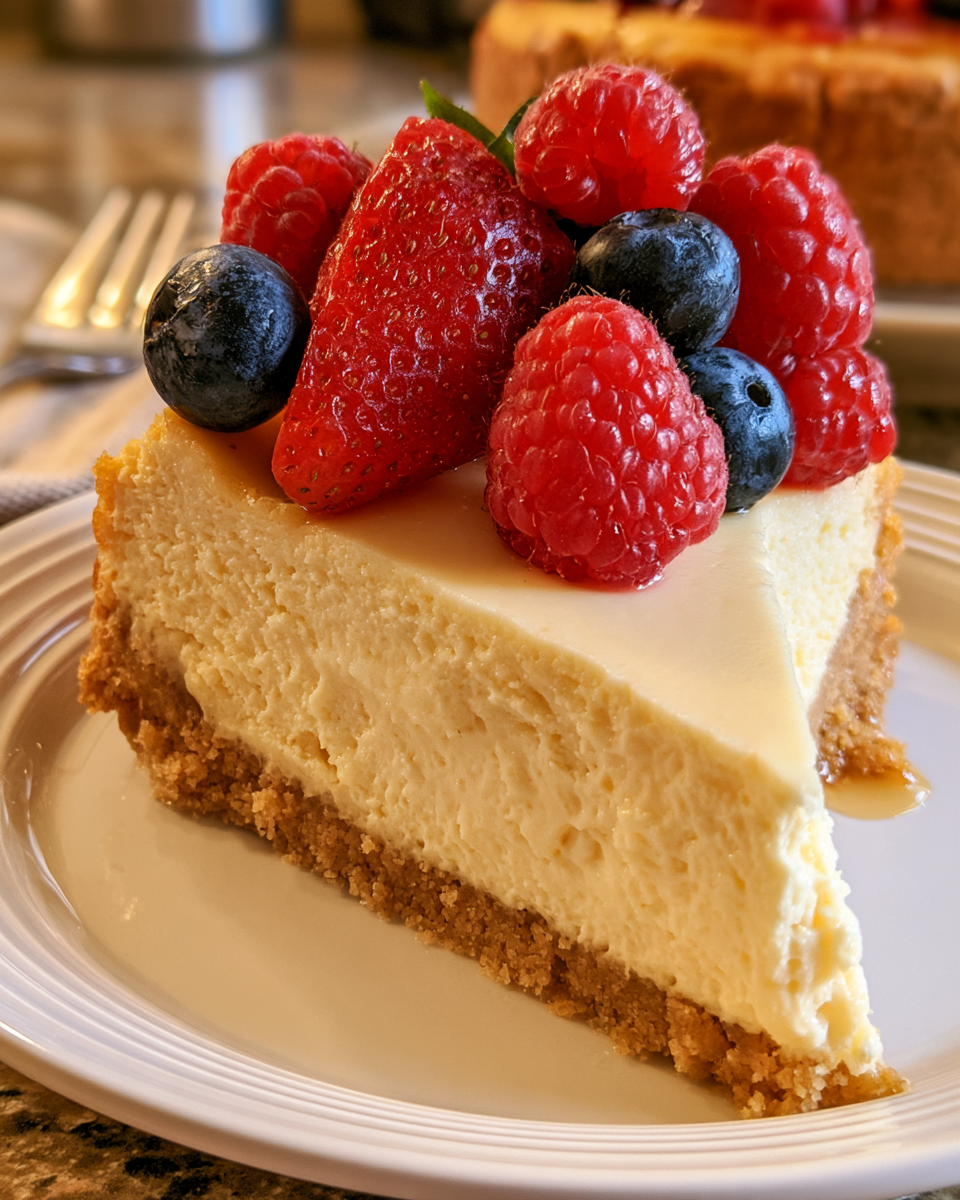
This creamy homemade cheesecake recipe works because it relies on the science of slow-baking and consistent temperature management. By using room-temperature cream cheese and eggs, the batter emulsifies perfectly to prevent lumps and air bubbles that cause cracks during the baking cycle. The water bath method provides an even, gentle heat distribution that prevents the edges from drying out before the center sets.
I developed this specific ratio of sugar to cream cheese to ensure a balanced flavor profile that highlights the signature tang of real dairy. My tested technique for cooling the cake inside the turned-off oven allows the center to firm up gradually. This approach avoids the rapid temperature shifts that compromise the delicate structure of custard-based desserts like professional-grade cheesecake.
Ingredients
| Ingredient | Quantity | Notes |
|---|---|---|
| Cream Cheese | 32 oz | Full-fat, room temperature |
| Granulated Sugar | 1.5 cups | Fine grain dissolves best |
| Sour Cream | 1 cup | Full-fat for texture |
| Large Eggs | 4 | Room temperature |
| Vanilla Extract | 2 tsp | Pure extract preferred |
| Graham Crackers | 1.5 cups | Finely crushed crumbs |
| Unsalted Butter | 6 tbsp | Melted |
Step-by-Step Instructions
Crust Preparation
Preheat your oven to 350 degrees Fahrenheit.
Combine the graham cracker crumbs, melted butter, and one tablespoon of sugar in a mixing bowl.
Press the mixture firmly into the bottom of a greased 9-inch springform pan using the back of a glass.
Bake the crust for ten minutes then remove it to cool completely on a wire rack.
Cheesecake Filling
Beat the softened cream cheese and sugar together in a large bowl on medium speed until perfectly smooth.
Add the sour cream and vanilla extract while mixing on low speed to incorporate evenly.
Add the eggs one at a time, mixing briefly after each addition until just combined.
Pour the batter over the cooled crust and smooth the top with a spatula.
Baking and Cooling
Wrap the bottom of the springform pan securely with two layers of heavy-duty foil.
Place the pan into a large roasting pan filled with one inch of hot water.
Bake for 75 minutes or until the edges are set and the center wobbles slightly.
Turn off the oven and leave the door cracked for one hour to cool the cake slowly.
Refrigerate the cheesecake for at least eight hours before removing the pan rim.
Chef Tips for Perfect Results
Use room temperature ingredients to ensure the batter remains smooth and free of lumps.
Do not overmix the batter once the eggs are added to avoid incorporating excessive air.
Wrap your springform pan with high-quality, wide-roll foil to prevent water seepage during the bath.
Run a warm, thin-bladed knife around the edge of the pan before releasing the latch.
Clean your knife with warm water between each slice for sharp, professional-looking edges.
Common Mistakes to Avoid
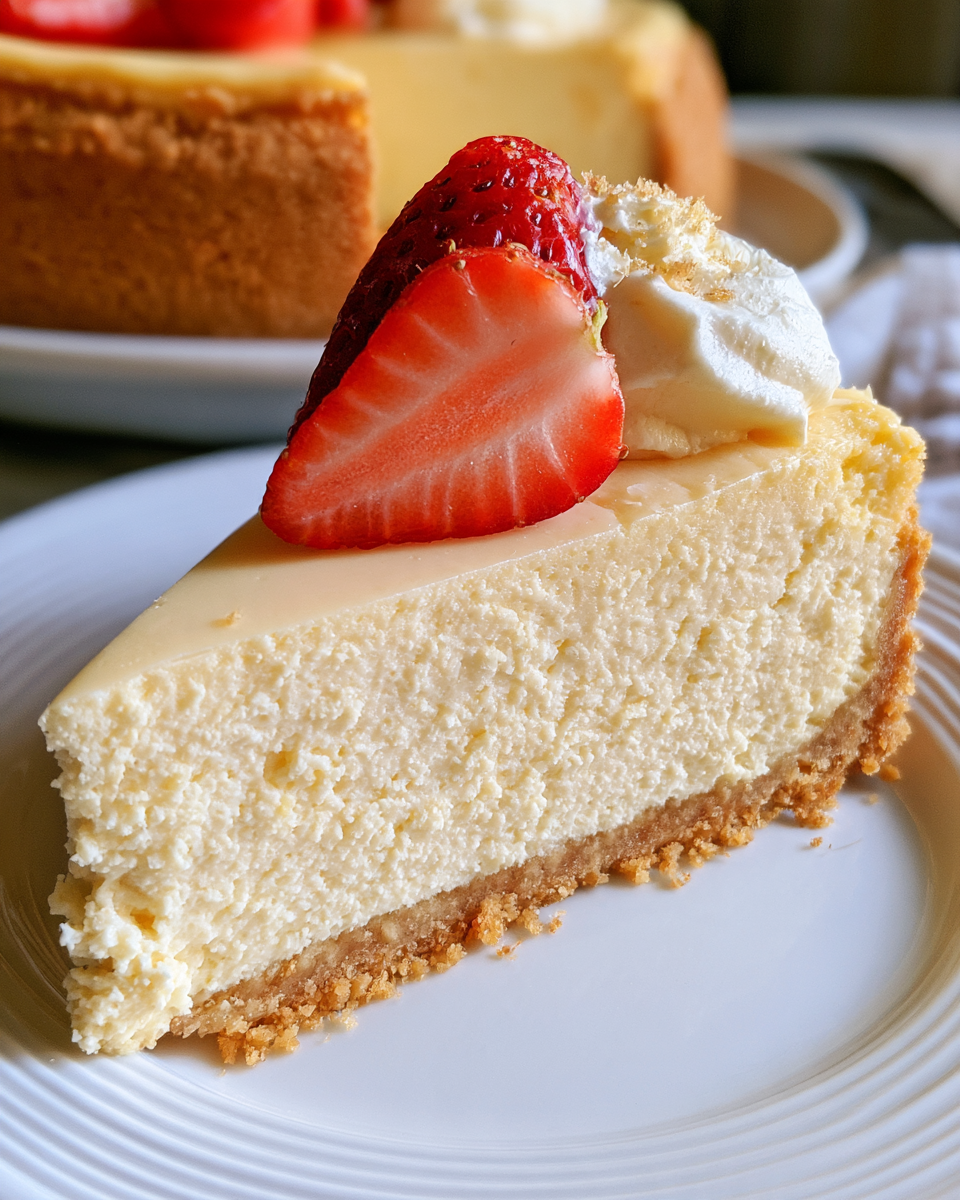
Overbeating the batter is a common mistake that introduces too much air, leading to cracks as the air escapes during baking. Mix on low settings only. Skipping the water bath is another frequent error that causes the outer edges to cook faster than the center. Always use a hot water bath for consistent heat. Ignoring the cooling time ruins the texture, so allow the cheesecake to chill fully in the refrigerator before serving.
Variations and Substitutions
| Ingredient | Substitution | Impact on Flavor |
|---|---|---|
| Sour Cream | Greek Yogurt | Adds more tang |
| Graham Crackers | Ginger Snaps | Spicier, deeper profile |
| Vanilla Extract | Almond Extract | Nutty, floral finish |
Serving Suggestions and Pairings
Serve this creamy homemade cheesecake with a fresh strawberry coulis or a simple blueberry compote for a pop of color. It pairs perfectly with a hot cup of black coffee or an Earl Grey tea to cut through the richness. For special occasions like anniversaries or birthday parties, top the dessert with freshly whipped heavy cream and shaved dark chocolate curls.
Storage and Reheating
| Method | Duration | Instructions |
|---|---|---|
| Refrigerator | 5 days | Keep in airtight container |
| Freezer | 2 months | Wrap tightly in plastic film |
Nutritional Information
Approximate values per serving.
| Nutrient | Amount per Serving |
|---|---|
| Calories | 480 |
| Fat | 35g |
| Carbohydrates | 32g |
| Protein | 8g |
Frequently Asked Questions
Can I use Greek yogurt instead of sour cream?
Yes, plain full-fat Greek yogurt is a direct substitute for sour cream. It provides a similar acidity level and maintains the structural integrity of the custard base.
How do I know when the cheesecake is finished baking?
The cheesecake is done when the edges appear set and firm while the center jiggles slightly like gelatin. It will finish firming up completely as it chills in the refrigerator.
Why did my cheesecake develop a crack on top?
Cracks usually occur due to sudden temperature changes or overbaking the mixture. Use a water bath and follow the slow-cooling process to prevent this issue from happening.
Is it possible to make this cheesecake one day ahead?
Yes, making the dessert a day in advance is actually recommended. Resting the cake in the refrigerator for twenty-four hours improves the set and deepens the flavor profile.
What is the best way to store leftover slices?
Store leftover slices in an airtight container within the refrigerator for up to five days. You may also freeze individual slices wrapped in plastic for later consumption.
Creating the perfect creamy homemade cheesecake is a rewarding experience that elevates any home baking repertoire. By following these specific temperature and mixing guidelines, you ensure a consistent result every time you step into the kitchen. Focus on the slow cooling process to maintain the integrity of your dessert, and enjoy the rich, velvety texture that only a scratch-made recipe provides. With these techniques mastered, you are ready to impress guests with a professional, decadent treat that highlights your skill and dedication to quality baking.
Creamy Homemade Cheesecake for Beginners
- Total Time: 600
- Yield: 12 servings 1x
- Diet: Vegetarian
Description
Indulge in a restaurant-quality, velvety smooth cheesecake right from your own kitchen. This beginner-friendly recipe utilizes the water bath method and slow-baking techniques to ensure a perfectly set, crack-free dessert. With a buttery graham cracker crust and a rich, tangy cream cheese filling, this timeless American classic is the ultimate treat for any special occasion.
Ingredients
32 oz full-fat cream cheese, room temperature
1.5 cups granulated sugar
1 cup full-fat sour cream
4 large eggs, room temperature
2 tsp pure vanilla extract
1.5 cups graham cracker crumbs
6 tbsp unsalted butter, melted
Instructions
Preheat oven to 350°F.
Combine graham cracker crumbs, melted butter, and 1 tbsp sugar in a bowl.
Press mixture into a 9-inch springform pan and bake for 10 minutes, then cool.
Beat cream cheese and remaining sugar until smooth.
Mix in sour cream and vanilla on low speed.
Add eggs one at a time, mixing until just combined.
Pour batter over cooled crust.
Wrap bottom of pan in heavy-duty foil.
Place in a roasting pan filled with 1 inch of hot water.
Bake for 75 minutes, then cool in the turned-off oven.
Notes
Ensure all ingredients are at room temperature to avoid lumps. Cooling the cake slowly in the oven helps prevent cracks on the surface. Wrap the pan tightly with foil to ensure no water leaks into the crust.
- Prep Time: 30
- Cook Time: 75
- Category: Baking
- Method: Baking
- Cuisine: American
Nutrition
- Serving Size: 1 slice
- Calories: 480
- Sugar: 32g
- Sodium: 310mg
- Fat: 36g
- Saturated Fat: 21g
- Carbohydrates: 35g
- Fiber: 1g
- Protein: 8g
- Cholesterol: 145mg
